Boiler Installation
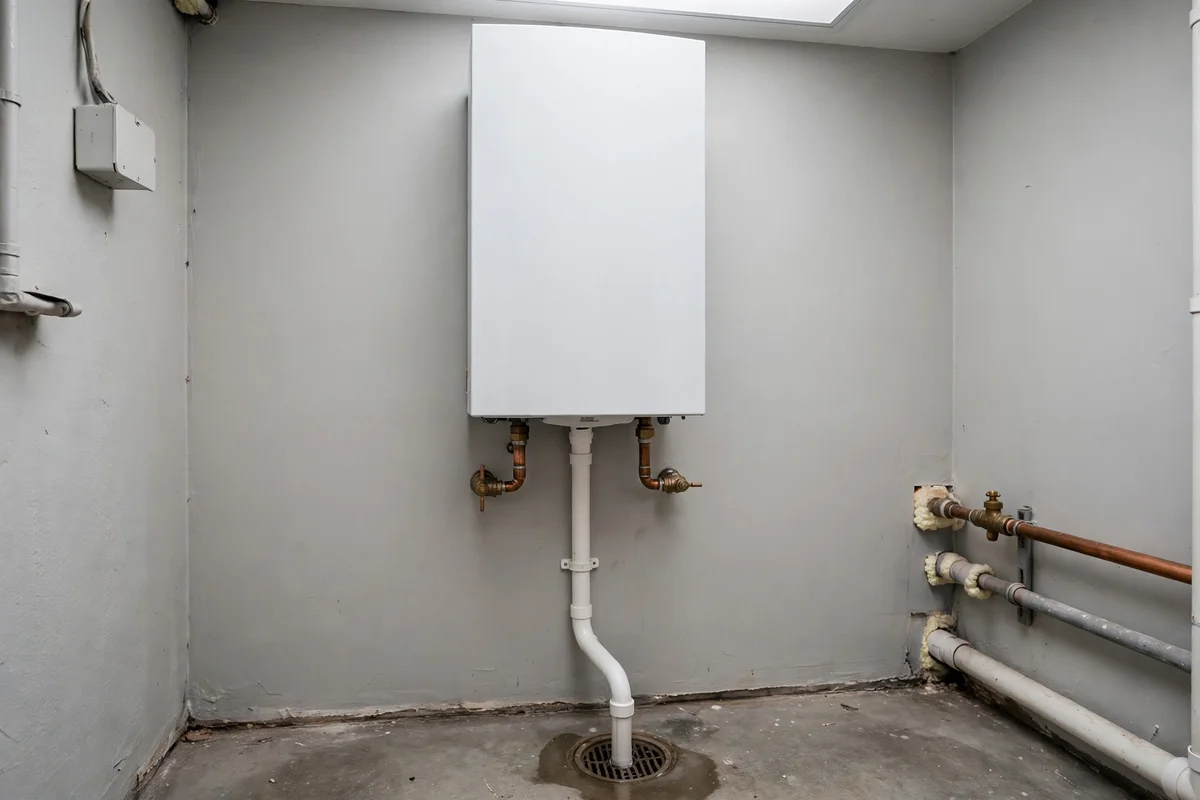
A new condensing boiler fitted to your home, with a proper condensate drain route.
Most modern gas boilers are condensing boilers, but few owners know what that word means. Learn how the technology works, in plain terms.
By Boiler Guard Delaware
If you have had a new gas boiler fitted in recent years, it is almost certainly a condensing boiler. The word sounds technical, but the idea is simple: a condensing boiler recovers heat from its own exhaust that older boilers threw away, and it uses that recovered heat to warm the water returning from your radiators. That recovery is why modern boilers use less fuel for the same warmth. This guide explains how it works, what it needs, and what to watch for.
If you already own a condensing boiler, one habit protects it more than any other: noticing the condensate pipe before winter. Walk outside in autumn, find the white plastic pipe on the wall, and check that it slopes downward, wears insulation, and ends at a proper drain. That two-minute check prevents the most common cold snap failure these boilers suffer, and it costs nothing. Pair it with the annual visit, and a condensing boiler will give you its full benefit for years.
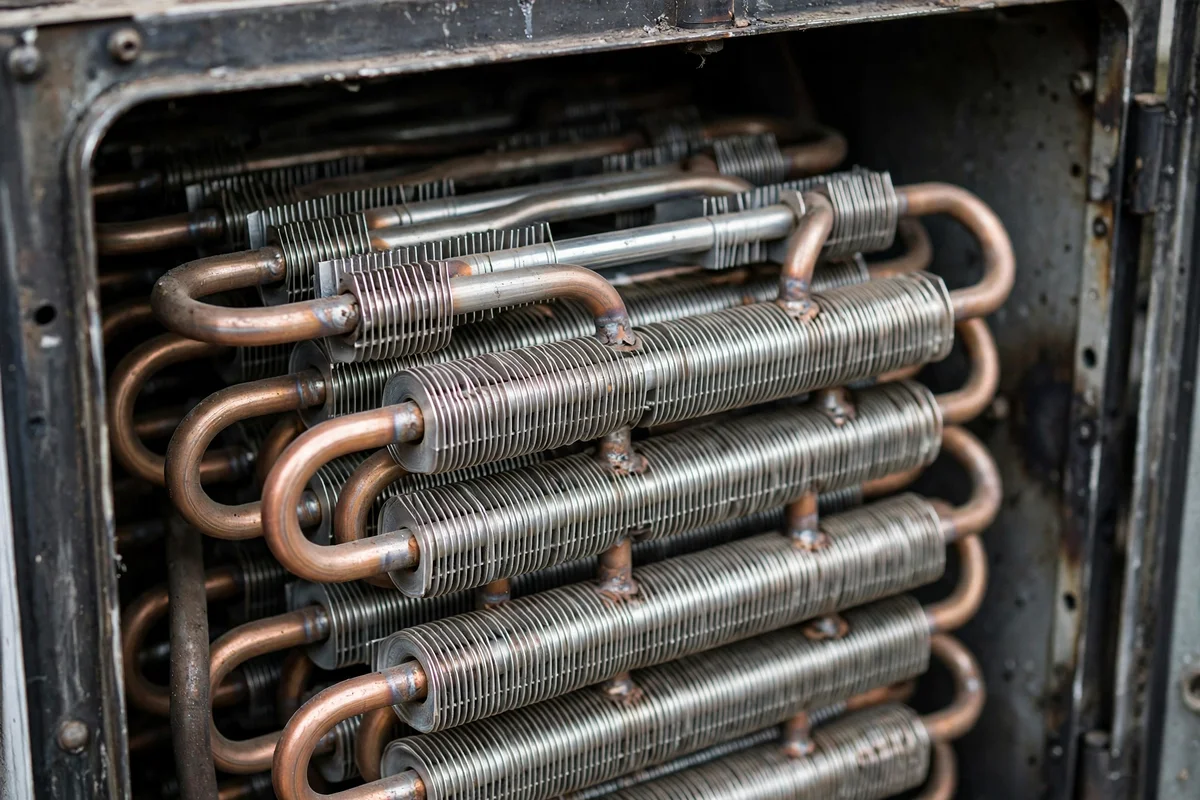
A boiler burns fuel to heat water, and the exhaust from that burning leaves through the flue as hot gas. In a condensing boiler, the exhaust passes over a second heat exchanger, where it meets the cooler water returning from radiators, and the exhaust cools enough that its water vapor condenses into liquid.
That condensing step releases extra heat, which warms the returning water before the main burner heats it further. The boiler therefore needs less fuel to reach the same temperature, since part of the work is already done by recovered heat. The condensed liquid, called condensate, drains away through a plastic pipe, which is the one visible difference owners notice on a modern boiler.
For the process to work well, the returning water must be cool enough. That is why condensing boilers pair best with radiators sized to run at lower temperatures, and with controls that avoid overheating the return. A system that runs very hot all the time condenses less, and gains less, so radiator sizing and thermostat settings matter. The U.S. ENERGY STAR program lists boilers that meet its efficiency criteria, which can help when you compare models.
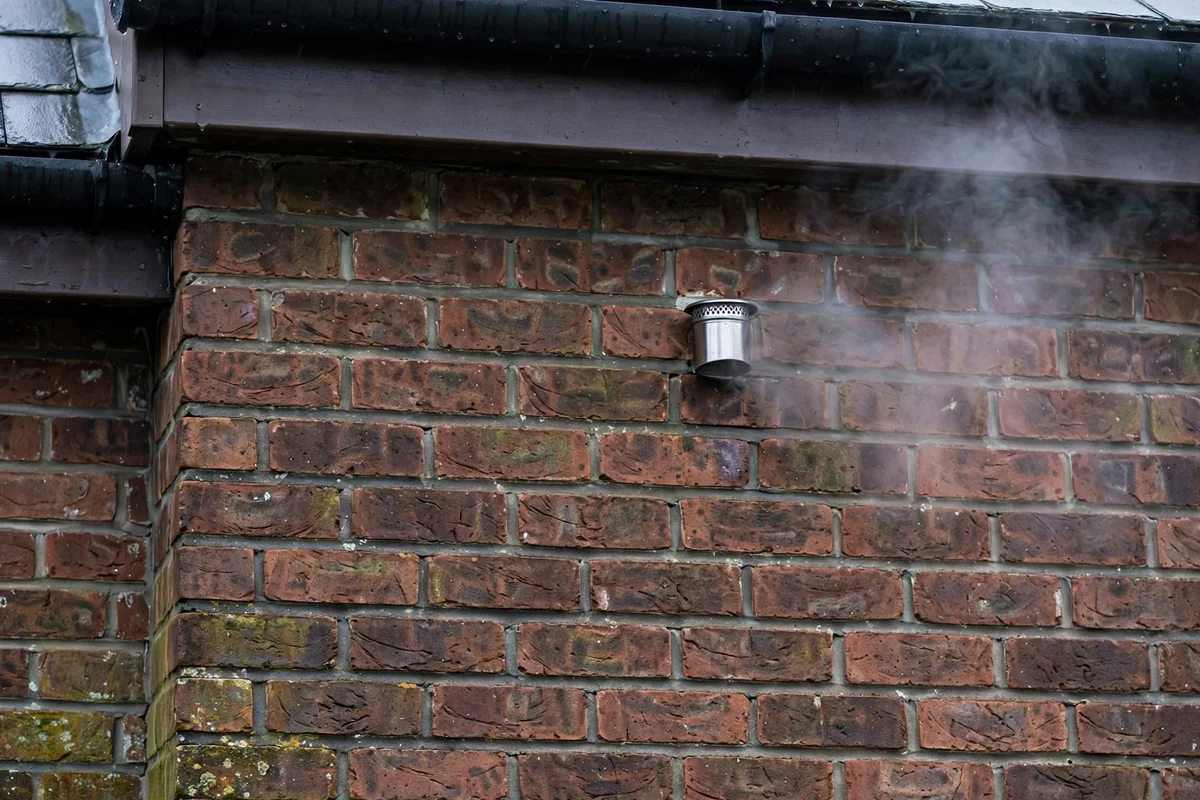
The condensate pipe carries the liquid formed during condensing away from the boiler, usually to a drain or soakaway outside. It is a plastic pipe, since condensate is mildly acidic and would corrode metal over time. The pipe must slope downward along its length so liquid drains without blockage.
In cold weather, the outside section of a condensate pipe can freeze, and a frozen pipe stops the boiler, since the liquid has nowhere to go. That failure is common in cold snaps and easy to spot: the boiler shows a fault, and the outside pipe is iced. Keeping the outside run short, insulated, and well sloped reduces the risk, and we can advise on the best route during a visit.
Because condensate is mildly acidic, it must drain to a proper place, not onto paths or soil near the house. A correct install routes it to a drain or a purpose-made soakaway, and that routing is part of what a good installer checks. If you see liquid pooling near a condensate pipe outlet, tell us, since the drain may be blocked or wrongly routed.
Not sure what your system needs?
Call (302) 291-0790Condensing boilers suit most homes with a gas supply, and they are the standard for new gas installs. They pair well with panel radiators, baseboards, and underfloor loops, and they work with stored hot water tanks as well as combi setups that heat tap water on demand. The technology is proven, and parts and knowledge are widely available.
Older homes with very small radiators may gain less, since small radiators need hotter water to heat a room, and hotter return water condenses less. That does not rule a condensing boiler out, but it may mean larger radiators are worth considering alongside the boiler, so the system can run at the lower temperatures where condensing shines.
Oil condensing boilers exist too, though they are less common than gas models, and they need careful flue and condensate handling. If your home runs on oil, ask us whether a condensing oil unit fits your system, since the answer depends on the flue route and the condensate drain available. Either way, the principle is the same: recover heat that older boilers wasted.
A condensing boiler needs the same annual visit as any boiler: burner, heat exchanger, flue, and safety controls checked and cleaned. The condensing heat exchanger needs attention too, since condensate can leave deposits, and the condensate trap and pipe need checking for blockages. A visit that skips the condensate side misses part of the system.
Owners can help by keeping the condensate pipe clear and noting any fault codes in cold weather. If the boiler stops during a cold snap, check the outside condensate pipe for ice before calling, since that detail helps us judge the cause. Do not pour boiling water on a frozen pipe repeatedly, and do not disconnect the pipe, since the boiler needs a proper drain route.
If you are considering a new boiler, or your current unit is a condensing model and you want to understand it better, call us and ask. We will explain what your system has, how it is doing, and what it needs, in plain terms. Homes and businesses across Delaware can reach us on the number at the top of this page. See also our boiler installation guide for details on what that involves.
Why return water temperature decides the saving
A condensing boiler only recovers exhaust heat when the water returning from radiators is cool enough for exhaust vapor to condense. Large radiators and lower flow temperatures help, since they send cooler water back. A system that always runs very hot condenses little, so the setting of the flow temperature matters as much as the boiler itself.
A condensing boiler recovers heat from its own exhaust gases, which a conventional boiler lets escape up the flue. The recovered heat goes back into the system, so less fuel is needed for the same warmth.
Burner heat plus recovered exhaust heat reaches the radiators, so the same warmth needs less fuel.
Condensing units appear on the boiler installation page and the combi boiler installation page, since many modern combi units use condensing technology.
| Feature | Condensing boiler | Conventional boiler |
|---|---|---|
| Exhaust heat | Recovered back into the system | Escapes up the flue |
| Flue and drain | Needs a condensate drain route | No condensate drain to plan |
| Best emitter fit | Lower-temperature emitters suit it best | Hotter water, wider emitter fit |
| Cold-weather weak point | Outside condensate pipe can freeze | No condensate pipe to freeze |
| Servicing focus | Burner, flue, condensate route, and controls | Burner, flue, and controls |
Yes, a condensing boiler recovers heat from its exhaust that older boilers throw away, so it needs less fuel for the same warmth. The gain is largest when return water runs cool, which is why radiator sizing and thermostat settings matter. A well-set system gains the most.
That pipe is the condensate drain, carrying away the liquid formed when exhaust vapor condenses. Condensate is mildly acidic, so the pipe is plastic rather than metal, and it must slope downward to a proper drain. It is a normal and necessary part of a condensing boiler.
Yes, but the gain depends on radiator size. Small radiators need hotter water to heat a room, and hotter return water condenses less, so the boiler gains less. Larger radiators let the system run cooler and condense more, which is why a survey may suggest radiator changes alongside a new boiler.
Condensing means the boiler cools its exhaust enough that water vapor in the gas turns to liquid, releasing extra heat. That heat warms the water returning from radiators, so the burner needs less fuel to reach temperature. The liquid formed drains away through a plastic condensate pipe.
Burning gas produces water vapor in the exhaust, and a condensing boiler cools that exhaust until the vapor becomes liquid. That liquid, called condensate, is a normal byproduct of recovering heat, and it drains away through a dedicated pipe to a drain or soakaway.
The boiler itself does not freeze in normal use, but its outside condensate pipe can freeze in a cold snap, which stops the boiler. Keeping the outside run short, insulated, and well sloped reduces the risk. If the boiler stops in cold weather, check the outside pipe for ice and call us.
Condensate is mildly acidic, so it must drain to a proper place, not onto paths or soil near the house. It will not harm a proper drain or soakaway, but it can corrode metal pipes and damage surfaces if wrongly routed. A correct install routes it safely from the start.
Rules vary by place and time, and they change, so ask us about the current position for your home rather than relying on a general claim. In practice, most new gas boilers supplied today are condensing models, since they are the standard product on the market.
With steady annual care, a condensing boiler serves for many years, like any modern boiler. Its condensing heat exchanger and condensate parts need attention at the annual visit, and a system that runs at sensible temperatures, with clean water, will last longer than one that is neglected.
Tell us what boiler you have, and we will walk through how it works and what it needs, in plain terms.
A new condensing boiler fitted to your home, with a proper condensate drain route.
For homes that want heating and hot water from one condensing unit.
What happens when a condensate pipe freezes, and how to spot it.
Last updated: October 26, 2026.