Boiler Replacement
When an old unit keeps failing, a planned replacement beats another round of patch repairs.
Learn more →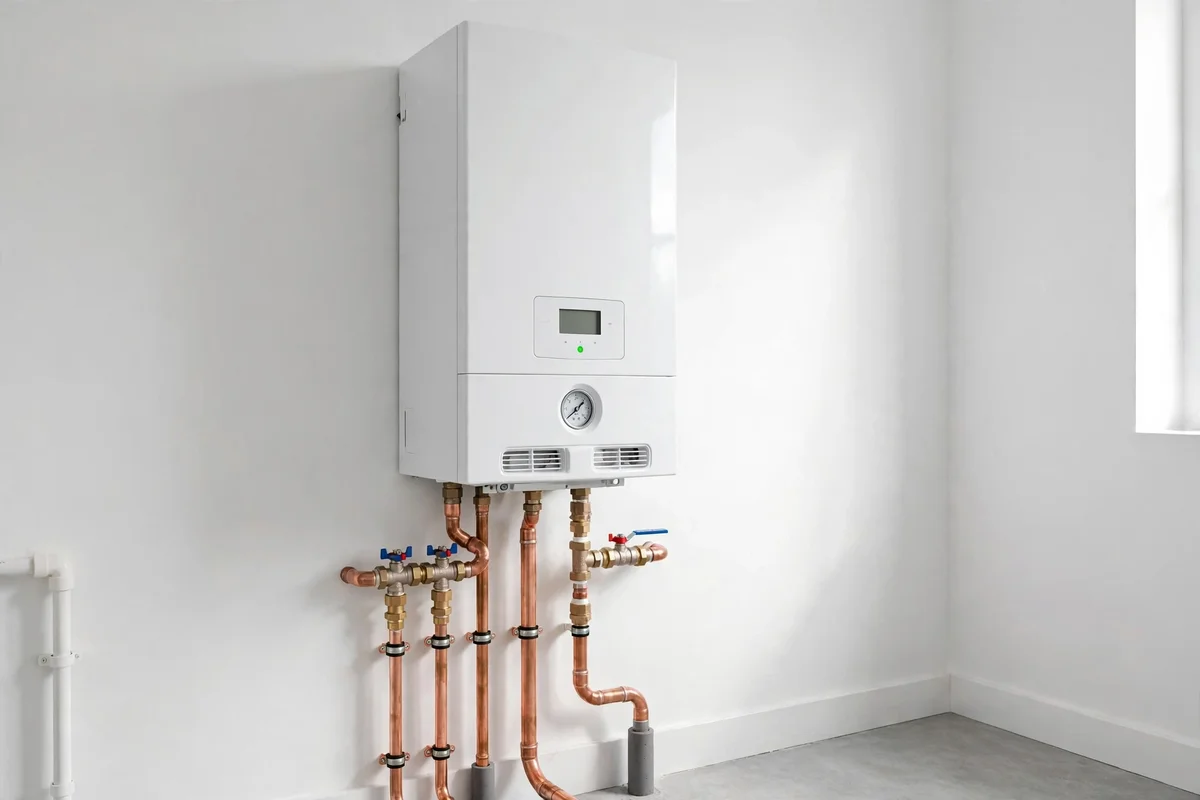
A new boiler should fit the building it heats, the pipework already in place, and the way you actually use each room. We plan the install around those facts, not around a single model.
A good install starts with the building, not with a boiler picked from a catalogue. We look at the size and layout of the rooms, the insulation and window area, the existing radiators or baseboards, and how the building is used through the day.
The heat load of a building is the amount of heat it loses on a cold day, and a boiler sized to that load heats steadily without short cycling or struggling to keep up. An oversized boiler fires in short bursts, wears parts sooner, and leaves rooms swinging between warm and cool. An undersized boiler runs constantly and still leaves far rooms cold. We measure rooms, note ceiling heights and window sizes, and ask about cold spots, rooms that are rarely used, and any extension or renovation that changed the heat demand. That survey shapes the boiler size, the pump choice, and whether the existing pipework can carry the new flow.
Fuel and venting shape the choice just as much as size. A home on a gas main, a building with an oil tank, and a property with limited venting routes each point toward different equipment and different install work. We check the gas supply, the flue route to the outside, the condensate drain point for a condensing model, and the space around the boiler for service access. When the survey is done, we explain the options in plain words and why each one fits or does not fit your building.
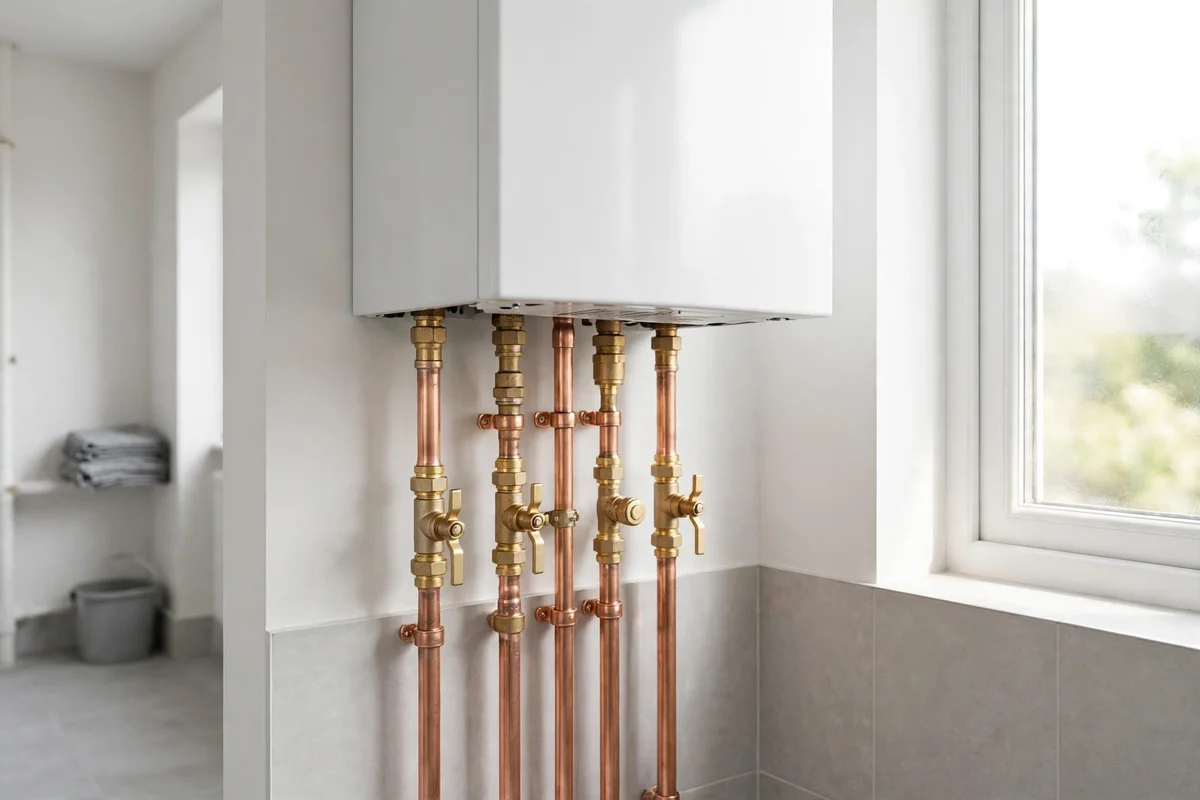
An install moves through survey, removal of the old unit where one exists, pipework and venting, connection, and testing. Each stage has its own checks, and we do not rush past a check to save an hour on the day.
Pipework comes first after the old unit is out of the way. We run new copper or adapted pipe runs to the boiler, fit isolation valves so future service can shut the boiler off without draining the whole system, and add a filling point and pressure relief route that meet the boiler maker instructions. The pump, expansion vessel, and controls are fitted and wired, then the flue is run to the outside with the fall and clearances the instructions require. Where radiators or baseboards stay in place, we check their valves and bleed points, because a new boiler cannot fix emitters that are blocked or airlocked.
Once the pipework is connected, we fill the system slowly, vent air from each emitter, and check every joint for leaks while the system is cold and again once it is warm. The burner is commissioned to the maker settings, the controls are tested zone by zone, and the thermostat is checked against the actual room temperature. We show you how to read the pressure, how to use the thermostat, and what to watch for in the first days of running. A tidy install leaves the boiler room clean, the pipework labeled where it helps, and the instructions in your hands.
Planning a new boiler? Call (302) 291-0790 and talk through your building and heat needs.
Call (302) 291-0790Hot water boilers, steam boilers, and combi boilers each heat a building in a different way, and the right type depends on the emitters and hot water needs already in the building. A mismatch here causes years of awkward running.
A hot water boiler suits radiators, baseboards, and radiant floors, and it pairs with a separate hot water tank or an indirect tank for taps and showers. A steam boiler suits older steam radiators and one-pipe or two-pipe steam systems, and it should never be swapped for a hot water unit without reworking the whole emitter system. A combi boiler heats rooms and produces hot water from one compact unit, which suits smaller homes with modest hot water demand, and you can read more on our combi boiler installation page. We compare these types against your building rather than steering every job toward one style.
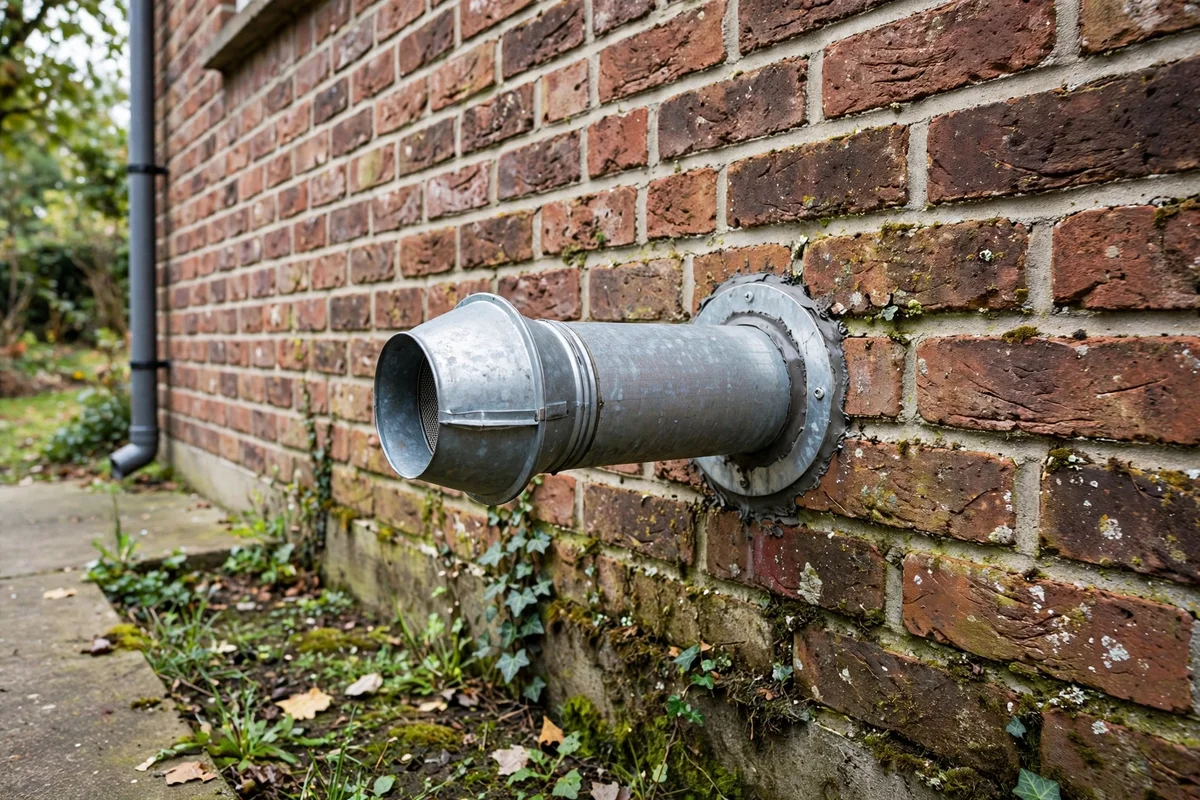
Condensing models recover heat from exhaust gases and need a condensate drain, while non-condensing models vent hotter gases and suit some older flue routes better. The choice turns on the flue route, the return water temperature of your emitters, and the drain point available. Low-temperature emitters such as radiant floors let a condensing boiler work at its best, while older radiators sized for hotter water may need larger emitters or a different approach to get the same benefit. We explain that trade-off before the install, so the boiler you buy matches the system it will actually run.
Unsure which boiler type fits your home? Call (302) 291-0790 and we will walk through the options.
Call (302) 291-0790A new boiler needs a short settling period, and the first weeks tell us a lot about how the system behaves under real use. We ask you to note any room that stays cold, any radiator that needs bleeding often, and any noise that was not there during commissioning.
Those notes point to small adjustments, such as balancing radiators so far rooms get their share of flow, or tweaking a control setting so the boiler does not cycle in mild weather. Balancing matters more than most owners expect: a radiator near the boiler can steal flow from far rooms, leaving one end of a building warm and the other end cool. We balance by adjusting lockshield valves room by room and checking temperatures as we go. A system that is balanced heats evenly, uses less fuel, and puts less strain on the pump.
Planned care protects the install from its first season onward. Ask about planned boiler care to keep the burner clean and the controls checked, and about boiler controls and zone heating if some rooms need different schedules from others. We serve homes and businesses across Delaware, and our service areas page shows the areas we cover. A careful install plus steady care is what turns a new boiler into steady, even heat.
An install ends with paperwork that matters for future service: the boiler instructions, the commissioning record, and notes on pipework changes, control settings, and any emitter work done during the job. Keep those documents together and tell future technicians where they live.
A commissioning record shows burner settings, gas pressures where applicable, and control settings as left on the day, and that record lets a future visit check the boiler against its as-installed state rather than guessing. Pipework notes matter when a future repair needs to know which runs were changed, which valves were added, and where isolation points sit. Control notes matter when a thermostat or zone setting is questioned months later. We walk through the handover in person, showing pressure readings, thermostat use, and bleed points, and we answer questions before leaving, because a handover that is rushed leaves an owner unsure how to run a new system. Keep the record with the instructions, note the install date, and bring the record to the first maintenance visit so the technician can compare current readings with commissioning readings.
An installation starts with the building, not the box, and the steps below run in that order.
Handover happens only after the full cycle, with the controls explained in plain words.
An installation starts with the building, not the box. Radiators, heat loss, bathrooms, and zones decide the unit, and the unit is then fitted to that picture rather than copied from the old boiler.
| Topic | First option | Second option |
|---|---|---|
| Conventional boiler with a separate tank | Larger homes with several bathrooms | Space for a tank and a hot-water cylinder |
| Combi boiler | Smaller homes with one or two bathrooms | Mains pressure strong enough for on-demand hot water |
| System boiler with a stored tank | Homes that need stored hot water without a loft tank | Space for the cylinder and a sealed system layout |
Size to the house today
Insulation, windows, additions, and finished rooms change heat loss over decades. A unit sized to the original drafty house usually short-cycles in the insulated house that replaced it.
This work comes up most often in new boilers in Hockessin, installations in Pike Creek, and newer subdivision installs in Camden, though the same installation approach applies anywhere in Delaware. The same survey-first approach also shapes new boiler installs in Seaford and new boilers in Bellefonte homes. Your town page explains the local housing and conditions that shape the job.
Most straightforward installs take a day or two of work on site, depending on pipework changes, venting routes, and whether an old unit must be removed first. Jobs that move the boiler, rework pipe runs, or add zones take longer. We explain the expected schedule after the survey, once the pipework and venting route are known.
Not always. Sound radiators and baseboards can stay, provided their valves work and they are sized for the new boiler water temperatures. We check each emitter during the survey. Emitters that are blocked, leaking, or far too small for the room may need repair or replacement for the new boiler to heat evenly.
Sometimes, but the flue must match the new boiler type, fuel, and maker instructions. Condensing boilers and older boiler designs vent differently, and an old flue may be the wrong size or material. We inspect the flue route during the survey and explain any change before install day.
Boiler size follows the building heat load, which depends on room sizes, insulation, windows, and layout. A survey gives a size that heats steadily without short cycling. Guessing from the old boiler size can repeat an old sizing mistake, so we measure rather than copy.
Yes, where an old unit is being replaced, we disconnect it, remove it from the boiler room, and leave the area tidy. Access, stairs, and any tank or pipework that must stay are worth noting, so the removal plan fits the building.
Someone should be available at the start to confirm the boiler position, thermostat location, and any access needs, and at the end for the handover walkthrough. Between those points, the team works through the pipework, venting, and testing stages. Access, stairs, and any tank or pipework that must stay are worth noting.
Heating will be off while the old unit is disconnected and the new one is piped and tested. We plan the work to keep that gap as short as the job allows and explain the timing before install day, so you can plan around it.
A combi unit suits smaller homes with modest hot water demand, while a boiler with a separate or indirect tank suits larger homes and households that run several taps or showers at once. We compare your tap and shower use, room count, and existing pipework before recommending one route.
Note cold rooms, radiators that need bleeding often, new noises, and any pressure change on the boiler display. Those notes help us balance the system and adjust controls. Call us if pressure falls steadily or water appears near the boiler.
Tell us about your building, your radiators, and your hot water needs, and we will explain the install options that fit.
When an old unit keeps failing, a planned replacement beats another round of patch repairs.
Learn more →One compact unit for room heat and hot water, sized for smaller homes and modest demand.
Learn more →Controls that let different rooms follow different schedules after the install.
Learn more →Last updated: October 26, 2026.