01
Emergency Boiler Repair
For no-heat situations and boilers that quit without warning, when waiting until morning is not an option.
Learn more →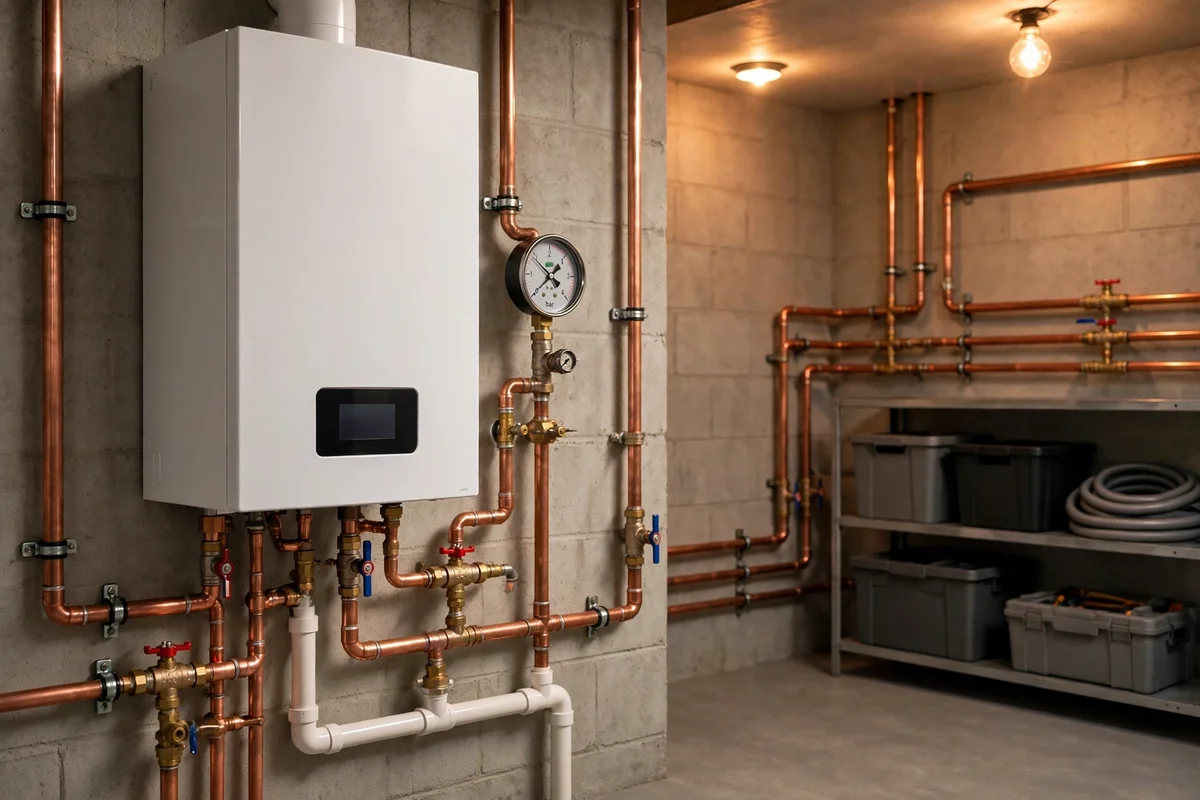
When your boiler stops, your house goes cold fast. We repair, install, and maintain boilers across the whole state, for homes and businesses, and boilers are all we do.
Delaware is a small state with old heating. The north is full of brick rowhouses and early-1900s homes that still run on steam and hot-water radiators, while Kent and Sussex counties hold plenty of oil-fired systems. A company that splits its attention across air conditioning, plumbing, and furnaces rarely learns these systems properly. We did the opposite: we narrowed to boilers, so the quirks of each system are familiar work, not a first-time lesson.
Wilmington and New Castle carry some of the oldest housing in the state, and many of those homes still heat with the boiler they were built around, or its replacement. Steam systems in particular punish guesswork: water level, pressure, and venting all have to be right together, or radiators bang, rooms stay cold, and the boiler short-cycles. Our work starts with the system as a whole, not the one part that looks broken.
Further south, the picture changes. Dover and Milford mix mid-century homes with new subdivisions, and Seaford and the Sussex towns hold older oil-fired boilers alongside newer gas systems. The fuel changes, the water changes, and the failure patterns change with them. That is why a statewide boiler company has to know counties, not just boilers: the same symptom means something different in a 1920s Wilmington rowhouse than it does in a 1970s Seaford ranch.
Cold snaps do the rest. Delaware winters are mild compared with New England, but a hard freeze still finds every weak joint, every tired valve, and every condensate line that runs too far outside. Our maintenance visits are built around exactly that: cleaning, checks, and small corrections before winter asks the hard questions. The ENERGY STAR boiler pages explain the same efficiency principles in official guidance.
Boiler acting up? Call and describe what it is doing.
Call (302) 291-0790Every job below is boiler work. Pick the one that matches your system, or call and we will point you to the right page.
01
For no-heat situations and boilers that quit without warning, when waiting until morning is not an option.
Learn more →02
New boilers sized to the home, fitted to the existing radiators or baseboards, and tested before we leave.
Learn more →03
When the old unit costs more to keep than to replace, a clean swap with the right size and setup.
Learn more →04
Yearly cleaning, safety checks, and tuning that keep a boiler running steady through winter.
Learn more →05
Steam heat is its own trade: water level, pressure, vents, and traps all working together.
Learn more →06
Hydronic heat that circulates hot water to radiators and baseboards, kept balanced and quiet.
Learn more →07
Cold radiators, leaking valves, and new radiators fitted to the system you already have.
Learn more →08
Hot water from your boiler through a storage tank, so showers stay hot without a second burner.
Learn more →09
One unit for heat and hot water, sized to the home and its bathrooms, with no tank to keep hot.
Learn more →10
Baseboard loops that heat room by room, repaired, replaced, and balanced so every room counts.
Learn more →11
Warm floors fed by the boiler, for remodels and additions where radiators do not fit the room.
Learn more →12
Thermostats, zone valves, and controls that let different parts of the house call for heat separately.
Learn more →Heat makes one loop through the house. The boiler heats water, the pump pushes it out, pipes carry it to radiators and baseboards, and cooler water returns to be heated again. Controls decide when the loop runs, and zones decide where it goes.
Boiler to pump to pipes to radiators and baseboards, then back again: one loop, with controls deciding when it runs and zones deciding where it goes.
When one room stays cold while the rest warm up, the break is usually somewhere on this loop: a valve, a pocket of air, a balance fault, or a zone that never called. Tracing the loop in order is how the fault gets found.
Delaware homes heat in a few distinct ways, and the differences matter when something goes wrong. A fix that suits a hot-water loop will not suit a steam system, and a boiler that makes hot water on demand is sized differently from one that fills a tank.
| System | How it heats | Where it fits | What to watch |
|---|---|---|---|
| Steam boilers | Boiling water sends vapor to radiators, where it condenses and returns | Older brick homes built around steam radiators | Water level, vents, and traps |
| Hot-water boilers | A pump pushes heated water around a closed loop | Homes with radiators or baseboards on a loop | Circulation, air removal, and balance |
| Combi boilers | One unit heats rooms and makes hot water on demand | Smaller homes with one or two bathrooms | Mains pressure and peak hot-water use |
| Boilers with an indirect tank | Boiler heat warms stored water through a coil in a tank | Homes that need stored hot water for several bathrooms | Coil, tank controls, and the boiler link |
Unsure which system heats your home? Describe the radiators and the boiler room, and we will identify it from there. The service pages explain each system on its own terms.
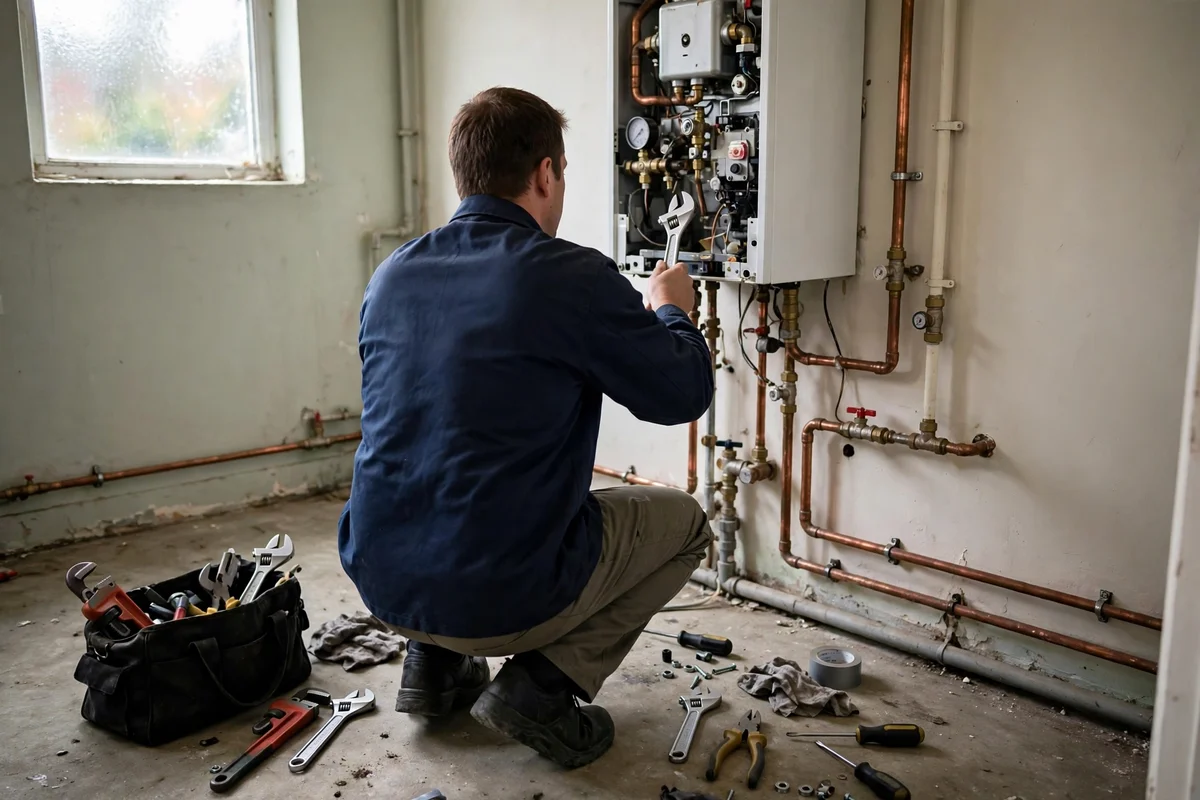
First, we listen. What the boiler is doing, when it started, and what changed in the house lately tells us more than any gauge reading alone. Then we look: pressure, water level, venting, controls, and the parts that wear first on your type of system.
That order holds whether the job is a repair, a replacement, or a yearly tune-up. Skipping the diagnosis step is how small problems get expensive, so we never skip it.
Not sure which service fits? Call and we will point you to the right page.
Call (302) 291-0790Three topics come up so often they deserve their own space here.
A puddle under the boiler, a dripping valve, or pressure that keeps dropping usually means water is escaping somewhere it should not. Leaks get worse when they sit: water damages floors, rusts parts, and lets air into the system, which then makes new noises and cold radiators. Turn the boiler off, catch the drip, and call. The fix depends on where the water comes from, and our maintenance visits catch many leaks before they start.
Gas is the common fuel in northern Delaware, where mains run through Wilmington, Newark, and the surrounding towns. Gas boilers need clean burners, safe venting, and controls that shut things down when they should. If you smell gas near your boiler, leave the area and call your gas company or emergency services from outside before anything else. For everything else gas-related, from repairs to oil-to-gas conversion, we handle that too.
Oil still heats a large share of Delaware homes, especially in Kent and Sussex counties and in older homes anywhere in the state. Oil systems have their own rhythm: nozzles, filters, and electrodes that wear on a schedule, and tanks that need watching. A yearly tune-up keeps an oil boiler burning clean and steady, and when the tank or the fuel stops making sense, conversion to gas is a real option where mains are available.
We work statewide. These are the towns with their own pages; the full list lives on the locations index.
Our home city, and the heart of Delaware boiler country: brick rowhouses, old steam systems, and radiators in nearly every room.
Wilmington boiler services →Historic homes and a high share of older heating systems, where boiler knowledge matters more than new equipment.
New Castle boiler services →University town with a mix of old neighborhoods and newer subdivisions, served across the full boiler range.
Newark boiler services →The state capital, where mid-century homes and workplaces alike rely on boilers of every age.
Dover boiler services →A fast-growing town with an old core, where oil heat still meets new gas mains street by street.
Milford boiler services →Western Sussex County, where older homes and electric conversions sit side by side with working boilers.
Seaford boiler services →Suburban homes from the 1960s onward, many with aging gas and oil systems ready for attention.
Hockessin boiler services →Detached homes and valley neighborhoods where boiler age varies house to house.
Pike Creek boiler services →One of the largest mid-century communities in the county, where many homes still heat the way they were built to.
Brookside boiler services →A tiny borough with a very old housing stock, and gas boilers that have served its streets for decades.
Bellefonte boiler services →Small-town streets of 1950s homes, mostly gas heat, close to Wilmington and easy to reach.
Elsmere boiler services →Riverfront town with a mix of gas and oil systems in homes of many eras.
Claymont boiler services →Most Delaware homes heat with one of four fuels, and the balance shapes the boiler work across the state. Gas leads in the north, where mains run through older towns, while oil and propane still heat many homes beyond the mains, and electricity covers a large share statewide. The chart below shows the statewide picture, so the fuel mix behind the service pages is visible at a glance.
Delaware homes by main heating fuel
Natural gas: 42.5%
Electricity: 36.0%
Fuel oil: 10.1%
Propane: 9.2%
Source: ZipAtlas, from U.S. Census Bureau American Community Survey data. The four fuels above account for most Delaware homes; the remainder use other fuels.
That mix is why the service pages cover gas and oil side by side, and why oil-to-gas conversion depends first on whether gas reaches your street. Homes on oil need burner care and tank awareness, homes on gas need ignition and venting checks, and both need the same yearly rhythm of testing, bleeding, and a full heat cycle.
Straight answers to the questions Delaware homeowners ask us most.
What sets a boiler's lifespan, and the signs that yours is near the end of it.
Read more →The noises, leaks, and cold rooms that mean it is time to call, not wait.
Read more →First steps when the heat goes out on a cold night, and what to check before you call.
Read more →Yes. Boiler Guard Delaware works statewide, from Wilmington and Newark in the north to Dover, Milford, and Seaford further south. If your home or business sits in Delaware and runs on a boiler, that is our service area. Towns without their own page are covered too.
We work on steam boilers, hot-water boilers, and combi boilers, along with the parts around them: radiators, baseboards, radiant floors, controls, and zone valves. Gas and oil systems are both covered. If you are unsure which type heats your home, describe the radiators and we will identify it.
Turn the boiler off, put towels or a bucket under the drip, and keep the area clear. Then call us and describe where the water is coming from. A leak can be a loose fitting, a tired valve, or pressure trouble, and each one gets a different fix.
Yes. Gas boilers are common in northern Delaware, and oil boilers still heat plenty of homes in Kent and Sussex counties. We repair, maintain, and replace both, and we also convert oil systems to gas where the home is ready for it.
A yearly service visit is the usual rhythm for a home boiler. The visit covers cleaning, safety checks, and a look at the parts that wear first, and it catches small problems before they turn into a cold house in January.
Yes. Our commercial boiler services cover offices, shops, apartment buildings, and other commercial properties, with the same boiler-only focus we bring to homes. See our commercial boiler services page for the details. Larger systems get the same careful diagnosis as a home boiler.
Call Boiler Guard Delaware and describe what your system is doing. Homes and businesses, anywhere in Delaware.
Last updated: October 26, 2026.