Steam Boiler Services
Steam systems at scale, with traps, vents, and pressure controls.
Learn more →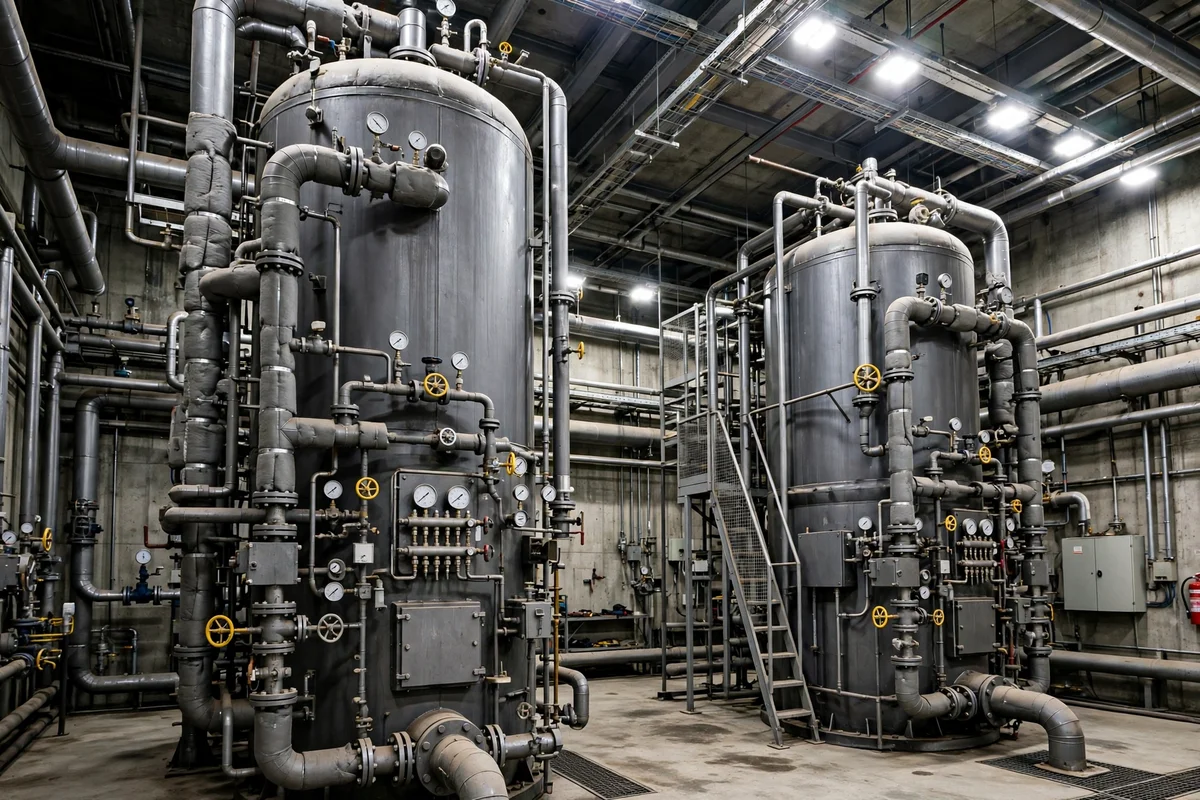
Larger buildings need larger thinking: multiple zones, longer pipe runs, and heat that must hold across offices, public areas, and workspaces alike. We work on commercial-scale systems for businesses and larger homes.
A commercial-scale system differs from a home system in scale, not in principle: the same burner, pump, and emitter logic applies, but with larger boilers, longer runs, more zones, and more people depending on the result. Tell us which areas lost heat and when the loss started.
Larger buildings often run multiple boilers in sequence, larger pumps, and pipe runs that travel far from the boiler room, with branches serving offices, public areas, kitchens, washrooms, and storage spaces that each need different temperatures. A fault in one branch can leave a whole wing cold while the boiler room gauges look normal, which is why commercial diagnosis starts with zone patterns rather than with the boiler alone. Controls are more layered too, with time schedules per area, outdoor reset curves for large emitter loads, and sometimes a building management panel that ties heating to occupancy hours. We map zones, pumps, and controls before touching a part, because a commercial system repaired without a map tends to be repaired twice.
This page covers commercial-scale systems in both businesses and larger homes, because a larger home with several zones, long runs, and a high-output boiler faces the same scale questions as a small business building. What matters is system size and complexity, not the sign on the door. A home with a commercial-scale boiler and a business with a similar unit both need zone mapping, pump capacity checks, and a maintenance plan that fits building use, and we provide that work for both.
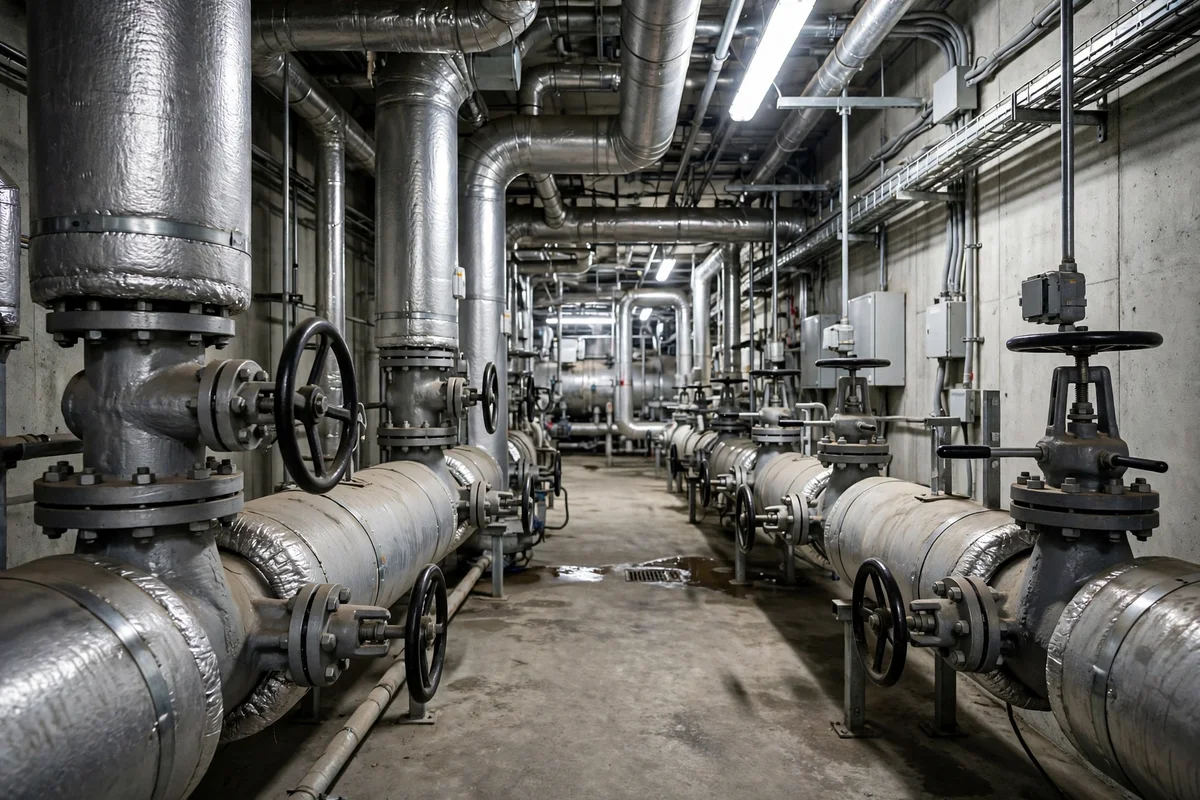
Commercial repair starts with the building pattern: which areas lost heat, when the loss started, and whether the loss moves with the time schedule. Those answers narrow the fault faster than any single gauge reading. Tell us which wing cooled and whether the loss follows a schedule.
A wing that cools every evening points to a schedule or zone valve fault, while a wing that cools steadily through the day points to a pump, balancing, or pipe fault. A boiler that short cycles under light load but runs steadily under full load points to sequencing or control settings, while a boiler that cannot hold temperature under load points to burner, heat exchanger, or pump capacity problems. We test boilers in sequence, checking which units fire, which idle, and how they hand over load, then follow flow through pumps, headers, and zone branches to the affected areas. Temperature readings across headers and branches prove flow faults that a boiler room glance would miss.
Repairs are planned around building use wherever possible. A repair that shuts heat to a whole building during working hours is avoided where a phased repair, a temporary zone arrangement, or an out-of-hours window can keep most areas running. We explain the repair scope, the areas affected, and the timing before work starts, so building managers can plan around the visit. After repair, we test every affected zone through a full call cycle, because a commercial repair is only proven when every area holds temperature, not merely when the boiler fires again.
Building heat uneven across zones? Call (302) 291-0790 and talk through your commercial system.
Call (302) 291-0790Planned care matters more at commercial scale, because a breakdown affects more people and a small fault spreads across more zones. A seasonal plan beats a breakdown calendar every time. Tell us about occupancy changes since the last schedule review.
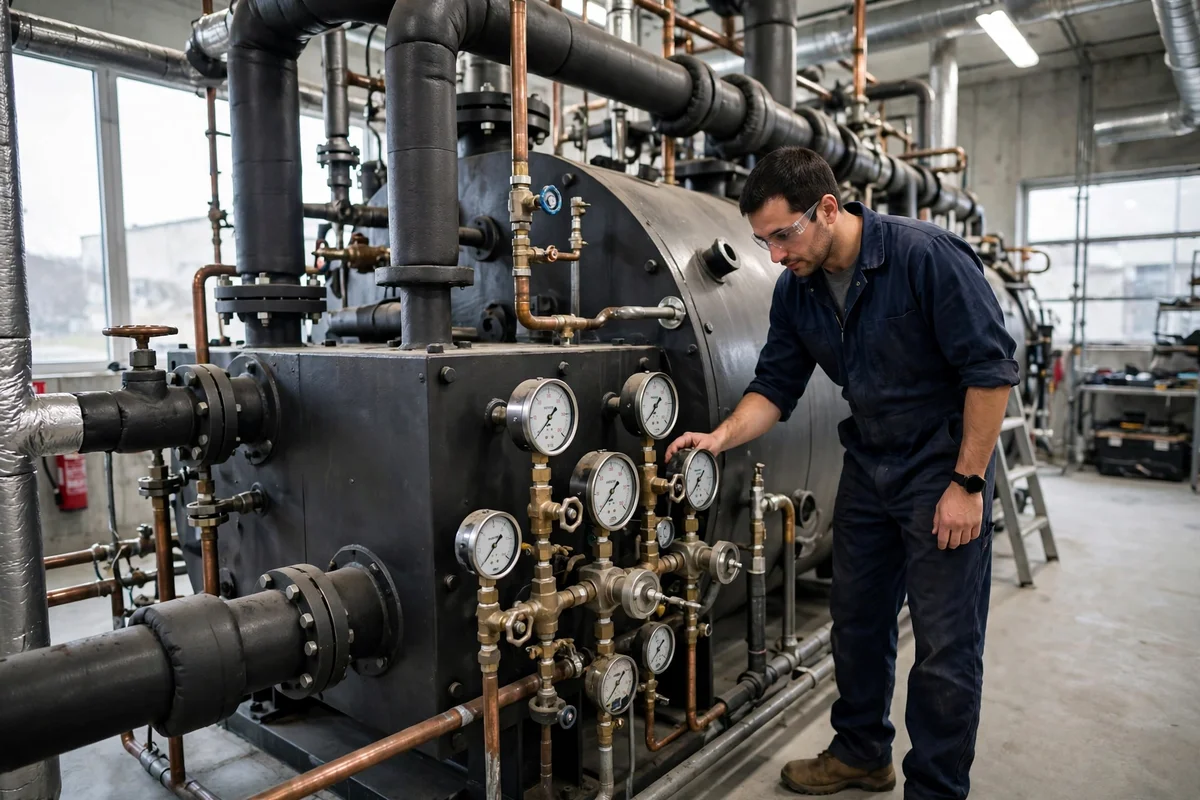
A commercial maintenance visit covers burners, ignition, safety controls, pumps, expansion and pressure provision, zone valves, and control schedules, with readings recorded per boiler and per zone. That record becomes the building heat history: pump currents, pressure trends, zone temperatures, and control settings tracked season by season, so a drift is spotted before it becomes a failure. Water quality is checked as well, because a large system holds far more water than a home system, and sludge in a large system blocks more emitters and strains larger pumps. Our system flushing and water treatment page covers that protection, and our boiler maintenance and tune-up page covers the seasonal visit pattern.
Control schedules are reviewed during planned care, because occupancy patterns change: a business that adds evening hours, a larger home that adds a home office, or a building that closes a wing all need schedule changes. An unchanged schedule heats empty areas and leaves new-use areas cold, wasting fuel while still disappointing occupants. We review schedules against current use, adjust outdoor reset curves for the emitter mix, and note settings for the next visit. That review is quiet work, but it is the work that keeps a large building comfortable without constant adjustment.
Planning care for a larger boiler? Call (302) 291-0790 and discuss a seasonal check plan.
Call (302) 291-0790Commercial work succeeds on communication as much as on pipework, because several people usually share decisions about a building system. We keep that communication plain, written, and specific. Keep records written and specific, so the next manager or technician can follow them.
After inspection, we explain what failed or what is wearing, which areas it affects, and what the repair or planned work involves, in words a non-technical manager can pass on to owners or tenants. Timings, areas affected, and any heating gap are stated before work starts, so the building can plan around the visit. Records are left in writing, with readings, settings, and watch points, so the next technician, manager, or owner can pick up the history without guesswork. For safety, carbon monoxide guidance for fuel-burning equipment is worth knowing, and the Environmental Protection Agency explains carbon monoxide sources in buildings.
For buildings considering a boiler change, our boiler replacement page covers sizing and commissioning at scale, and our boiler controls and zone heating page covers zone and schedule design. We serve homes and businesses across Delaware, and our service areas page shows where we work. Larger systems reward the same habits as home systems, clean water, correct pressure, tested controls, and a seasonal visit, applied with a map, a record, and a plan that fits the building.
A building with a commercial-scale system needs a written heat emergency plan, because a breakdown affects many occupants and a plan made during a breakdown is always worse than a plan made on a calm day. The plan need not be long to be useful.
The plan should name who calls the technician, where boiler instructions and records live, which zones can be isolated without affecting the whole building, and which areas house people most at risk from cold, such as nurseries, care rooms, or public waiting areas. It should note boiler room access, including keys, codes, and out-of-hours entry, so a technician is not delayed at a locked door while a building cools. It should also note any temporary heating arrangements the building can use, and which areas should be prioritized if only part of the system can run. Review the plan when occupancy, zones, or schedules change, and keep it with the boiler records rather than in a single manager memory. A building with a plan recovers from a breakdown faster, because every decision that can be made calmly already has been.
A commercial visit covers the building as one system, zone by zone and loop by loop, before any part is fitted.
Findings are explained in plain terms, with the wider system left running through a full cycle.
Commercial boilers heat offices, shops, schools, and apartment buildings, where a failure affects tenants, staff, or customers rather than one family. The check covers every zone and every loop, at a scale where a single missed zone matters more.
| Topic | First option | Second option |
|---|---|---|
| Offices and shops | Zones that follow working hours | Controls and zoning checked across the whole building |
| Apartment buildings | Shared boilers serving many households | The whole building loop, not just the reporting apartment |
| Schools and larger buildings | Long loops and many zones | Balance and circulation tested under full load |
| Small commercial units | One boiler serving a public space | A failed morning costs a day of trade, so testing comes first |
A fault affects more than one household
In a shared system, a zone that never calls, a valve that sticks, or a loop slowly filling with air can run for months before anyone notices. The autumn check exists to find exactly those faults before winter does.
This work comes up most often in commercial work in Dover, commercial boilers in Wilmington, and commercial systems in Newark, though the same commercial approach applies anywhere in Delaware. The same full-building check also covers commercial boiler checks in Milford and business boilers in Hockessin. Your town page explains the local housing and conditions that shape the job.
A commercial-scale system is defined by size and complexity: larger boilers, longer pipe runs, multiple zones, and higher heat loads, whether in a business building or a larger home. The work focuses on zone mapping, pump capacity, sequencing, and schedules, rather than on a single boiler alone.
Commercial maintenance covers multiple boilers, pumps, zones, and control schedules, with readings recorded per boiler and per zone. It also reviews occupancy schedules and water quality at scale, because a large system holds more water and affects more areas when a fault spreads.
Where possible, we plan repairs and maintenance around building use, using phased work or out-of-hours windows for jobs that would otherwise shut heat to working areas. We agree timings and affected areas before work starts, so the building can plan around the visit.
Yes. This service covers commercial-scale systems in both larger homes and businesses, because scale and complexity, not building type, decide the approach. A larger home with several zones and a high-output boiler receives the same mapping and planning as a business building.
Multiple boilers usually run in sequence, with a lead boiler handling light load and further boilers joining as demand rises. Sequencing controls decide the order and handover, and a sequencing fault can leave one boiler overloaded while another idles. We test sequencing under varying load during a visit.
A cold wing usually points to a zone valve, pump, balancing, or schedule fault affecting that branch, rather than to the boiler as a whole. We map the branch, test its valve and flow, and check its schedule before recommending a repair.
Keep a written record of maintenance visits, readings per boiler and zone, control settings, water treatment, and repairs. That history lets the next technician spot drifts, such as falling pressure or rising pump strain, before they become failures. Readings, settings, and repair history are worth noting in the record.
A seasonal check before the heating season is the baseline, with water quality and control schedules reviewed at the same time. Heavily used systems or systems with a history of faults may benefit from more frequent checks, based on what visits find.
Yes. Replacement planning covers load calculation for the whole building, boiler sequencing, pump and header sizing, venting, and phased changeover timing around building use. We survey zones and schedules first, so the new system matches current building needs. Zones, schedules, and building use are worth noting during the survey.
Tell us about your zones, your boilers, and which areas misbehave, and we will map the system from there.
Steam systems at scale, with traps, vents, and pressure controls.
Learn more →Hot water boiler, pump, and valve work behind commercial zones.
Learn more →Schedules and zone design for buildings with many areas.
Learn more →Last updated: October 26, 2026.