Radiator Repair and Installation
Tall emitters for rooms where baseboard length alone cannot meet heat need.
Learn more →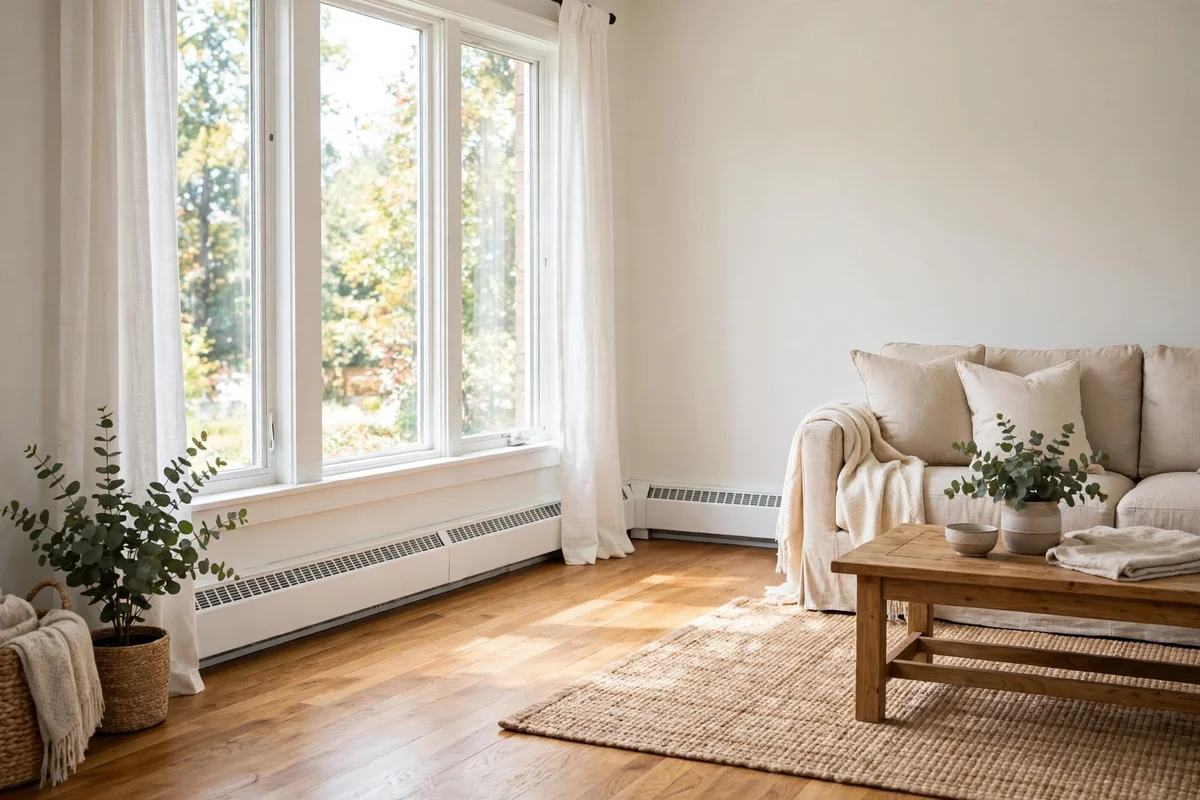
Baseboard heat is quiet, low-profile, and easy to live with, until one run stays cold, leaks at a joint, or heats unevenly. We repair, install, and balance baseboard runs room by room.
Hot water baseboards are long, low emitters that run along the base of a wall. Hot water flows through a pipe inside a finned element, air rises through the fins as it warms, and gentle convection carries heat into the room.
That convection is quiet and calm and without drafts when the run is clear and balanced, which is why baseboards suit bedrooms and living rooms so well. The run length matters: a longer run releases more heat, while a short run in a large or drafty room will always struggle. Placement matters too, because a baseboard under a window meets cold air where it enters, while a baseboard hidden behind heavy furniture or long curtains cannot release heat into the room. Water temperature matters as well, since baseboards sized for hotter water deliver less heat if a new boiler runs cooler, and that mismatch shows up as rooms that never quite warm up.
Each baseboard run connects to the boiler loop through supply and return pipes, with valves that control flow into the run. A run can serve one room or several rooms in series, and the flow balance between runs decides whether rooms heat evenly. A run near the boiler naturally takes more flow than a far run, so balancing valves are adjusted to share flow fairly. When a run heats unevenly along its length, the cause is usually air, sludge, a stuck valve, or a balancing fault, and we check those in turn before assuming the boiler is at fault.
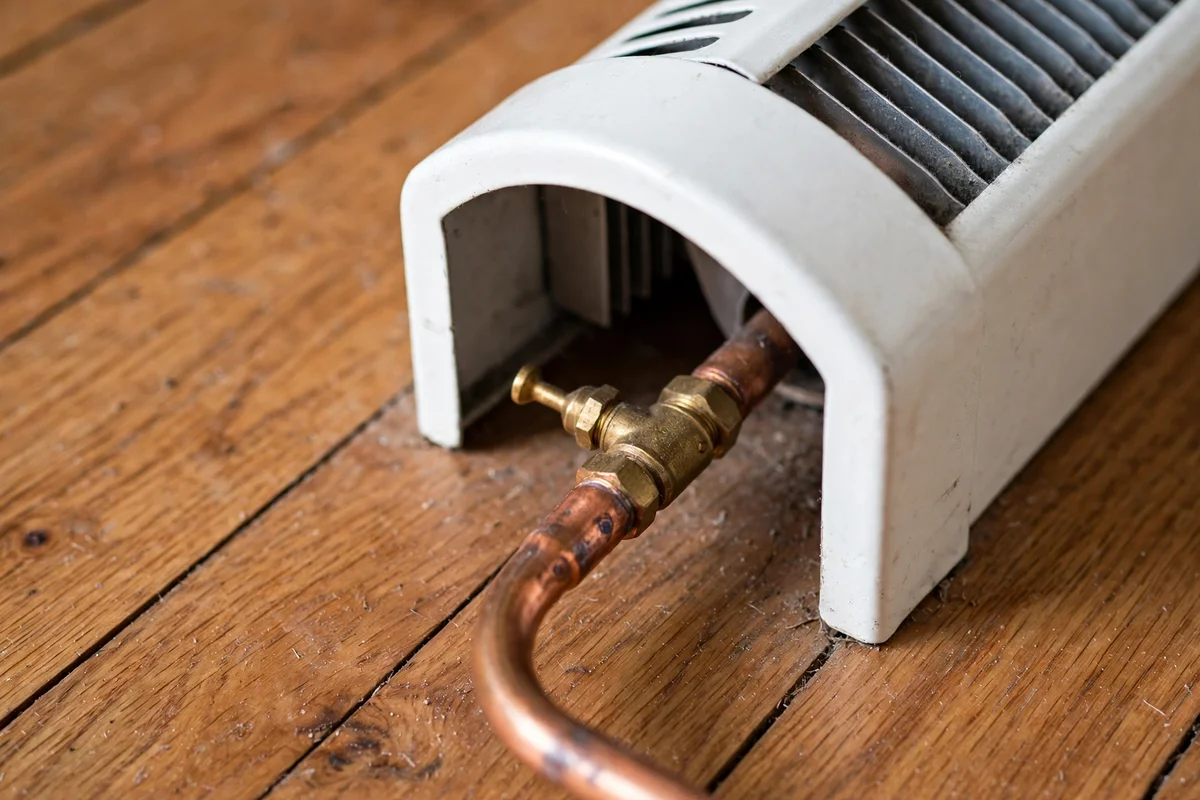
Baseboard faults are usually local, which makes them easier to fix than a whole-system fault, provided the diagnosis starts at the run itself. Owners can help by noting exactly which run and which part of the run misbehaves. Tell us which run and which part of the run misbehaves.
A run that stays cold end to end usually has a closed or stuck valve, an airlock, or no flow from a zone valve that has failed. A run that heats at one end and stays cold at the other usually holds air or sludge, or suffers a balancing fault that starves its far end. Dripping at a joint or valve points to a connection that needs remaking, while a run that knocks or ticks as it heats usually expands against a tight bracket or pipe clip. A run that heats when its room never calls for heat points to a zone valve stuck open. We test valves by hand and by temperature, bleed air where it collects, and check balancing before replacing parts, because a new valve cannot fix a run that is simply starved of flow.
Physical condition matters for baseboards more than for radiators, because their fins bend easily and their covers dent. Bent fins block airflow and cut heat output, while a damaged cover restricts convection and looks unsightly. We straighten fins where possible, replace damaged covers and elements where needed, and check that covers sit clear of the wall for airflow. After repair, we run the system and feel each run end to end, so the fix is proven along the whole length, not just at the valve end.
Baseboard run staying cold? Call (302) 291-0790 and tell us which room and which wall.
Call (302) 291-0790A new baseboard install starts with the room and the wall, not with a length picked from habit. We measure the room, note windows and outside walls, and agree the wall run that gives the best heat distribution. Tell us about furniture plans for the wall where the run will sit.
Length is sized to room heat need, window area, and insulation, and a run that is too short leaves a room chronically cool. We choose the wall that best counters cold air, usually under windows or along the coldest outside wall, and we check furniture plans, because a run planned behind a wardrobe or a long sofa will never heat the room properly. Pipework is run neatly along the wall or through the floor as the building allows, with valves fitted for control and balancing. Where a room needs more heat than one wall can provide, we discuss a second run or a different emitter style honestly, rather than fitting a short run and hoping for the best.
Commissioning a new baseboard run means proving heat along every meter of it, not just at the valve end. We open the run fully, let the system settle, then walk the wall feeling for cool patches that would betray trapped air or a balancing shortfall. Room temperature is checked away from the run itself, because a wall that feels warm while the room center stays cool points to furniture blocking convection or to a run that is simply too short for the space. Valve operation is demonstrated, including how a thermostatic head, where fitted, responds to room air, and we leave a note of the balancing setting so a later visit can return the run to its commissioned state without guessing.

Adding baseboards to a room? Call (302) 291-0790 and talk through length and layout.
Call (302) 291-0790Baseboards ask for little care, and that little care keeps them heating evenly. Dust, furniture, and valve attention cover most of it. Vacuum fins gently from time to time, because dust on fins cuts heat output noticeably and steadily. Tell us about cold patches and drips before winter.
Vacuum fins gently from time to time, because dust on fins insulates them and cuts heat output, and keep furniture and long curtains clear of the run so warm air can rise unhindered. Before winter, run the system and feel each run end to end, noting any cold patches, drips, or valves that will not turn, and call about those before cold weather arrives. If several runs heat unevenly or system water looks dark when bled, the problem may sit in the water itself, and our system flushing and water treatment page covers that work. Radiator rooms in the same building may need attention too, and our radiator repair and installation page covers those emitters.
Pair baseboard care with boiler care for the best result. Ask about planned boiler care for the seasonal boiler check, and about boiler controls and zone heating if some rooms need different schedules. We serve homes and businesses across Delaware, and our service areas page shows where we work.
Extensions and converted rooms often gain baseboard heat, because baseboards fit along new walls without the wall space a tall radiator needs, and they suit rooms where furniture plans leave little spare wall. Planning those runs well avoids cold new rooms.
A new room needs its own heat calculation, because its insulation, glazing, and exposure usually differ from the main house, and a baseboard length copied from another room will rarely match. We measure the new room, check its windows and outside walls, and size the run to that room alone, then check boiler and pump capacity for the added load. Pipework routes from the existing loop must be planned before floors and finishes close, because a pipe run added after finishes means lifting floors or chasing walls. Zone thinking matters too: a new room used differently from the main house, such as a home office or a guest room, may suit its own zone control rather than sharing a zone that heats it whenever the main house calls. A baseboard run planned with the extension, rather than added as an afterthought, heats the new room as evenly as the rooms it joins.
Baseboard work starts at the loop, not at the cold room, since one cold baseboard can trace back to a valve, a feed, or a balance fault further along the run.
A baseboard job is done when every room on the loop holds even heat, not when the first cold room warms up.
Baseboard loops carry hot water along the wall and give heat up through the room. Their faults are usually about air, balance, or a valve, and a long single loop loses heat along its length, leaving far rooms cool.
| Topic | First option | Second option |
|---|---|---|
| Gurgling along the run | Air trapped in the loop | Bleed high points and check for air drawn in |
| Far rooms cool, near rooms warm | An unbalanced or over-long loop | Balance flows and check circulation |
| One baseboard cold while others heat | A stuck valve or blocked feed | Test that valve and that feed before judging the boiler |
| Dust and poor output | Fins clogged or blocked by furniture | Clear fins and keep furniture clear of the run |
Keep baseboards clear
Furniture pushed against a baseboard blocks the airflow the loop depends on, and a blocked run heats the furniture instead of the room. Clear space along the run is part of the system, not housekeeping advice.
This work comes up most often in baseboard loops in Newark, baseboards in Elsmere, and baseboard work in Wilmington Manor, though the same baseboard approach applies anywhere in Delaware. The same loop-by-loop approach also reaches baseboard balancing in Seaford and baseboard repairs in Clayton. Your town page explains the local housing and conditions that shape the job.
A cold run usually means a closed or stuck valve, an airlock, a balancing fault, or a failed zone valve for that run. We test the valve, bleed air, and check flow balance before replacing parts, because each cause needs a different fix.
Often, yes, provided pipework can reach the room and the boiler and pump can handle the extra load. We survey the pipe route, room heat need, and pump capacity first, and explain any boiler or pump work the addition requires.
Ticking usually comes from pipes or elements expanding against tight brackets as they warm. It is often harmless, but persistent knocking can point to air, pressure, or mounting faults. We check brackets, air, and pressure to tell normal expansion from a fault.
Baseboards bleed at a small vent, usually at the far end of the run. With the system running, open the vent briefly until water flows steadily, then close it and check boiler pressure. If the same run needs bleeding often, air is entering the system and the source should be found.
Length changes are possible where pipework allows, but length sets heat output, so a shorter run heats less and a longer run heats more. We size any change to the room and rebalance neighboring runs so the change does not starve other rooms.
End-to-end temperature change usually means air, sludge, or a balancing fault starving the far end. We bleed air, check flow, and adjust balancing valves, and we check water condition if several runs show the same pattern. Air, sludge, and balancing patterns are worth noting across runs.
Yes, provided the new boiler water temperatures suit the baseboard lengths. Baseboards sized for very hot water deliver less heat at lower temperatures, so we check lengths against the new boiler settings during any boiler change and flag runs that need attention.
Vacuum fins gently with a brush attachment, and wipe covers with a damp cloth when cool. Avoid bending fins, because bent fins block airflow and cut heat output. Straightening bent fins restores airflow and is part of a baseboard service visit.
Yes. We work on baseboard systems in homes and businesses across Delaware, including multi-room buildings where run balancing and zone control matter as much as any single run. Run lengths, room counts, and zone control needs help us plan the visit properly.
Tell us which room and which wall, and how the run heats end to end, and we will plan the visit from there.
Tall emitters for rooms where baseboard length alone cannot meet heat need.
Learn more →Boiler, pump, and valve work behind every baseboard run.
Learn more →Zone controls that let each baseboard area follow its own schedule.
Learn more →Last updated: October 26, 2026.