Radiant Floor Heating
Area thermostats and manifold controls for floor-by-floor comfort.
Learn more →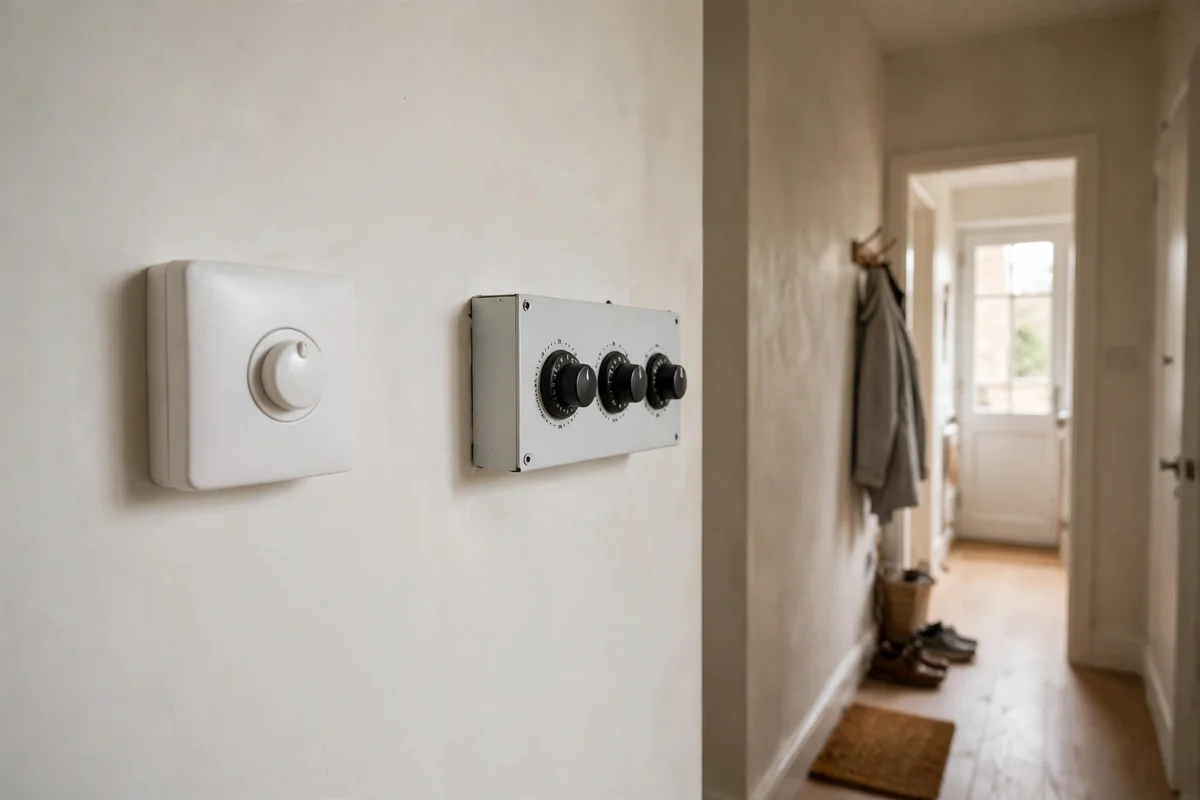
Controls decide when heat runs, which rooms receive it, and how hot the water should be. When controls are wrong, even a sound boiler heats the wrong rooms at the wrong times.
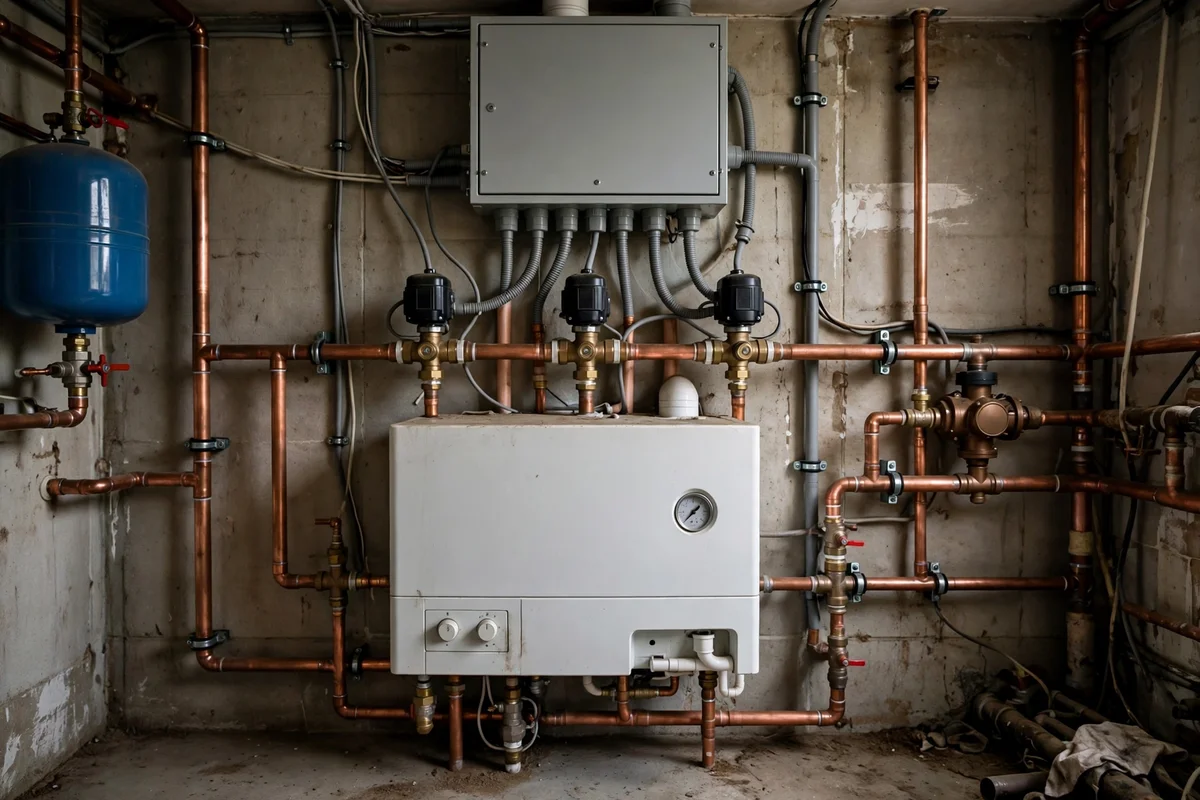
Boiler controls are a chain, and each link has one job. A thermostat senses room temperature, a zone valve opens a pipe route, a pump moves water, and an aquastat or outdoor reset sets water temperature. When one link fails, the whole chain misbehaves.
A thermostat that sits in a drafty hallway, above a radiator, or in direct sun misreads the room it serves, so the boiler fires too long or stops too soon. A zone valve that sticks open heats a zone that never called, while one stuck closed leaves a zone cold despite a thermostat calling loudly. An aquastat set too high wastes fuel and overheats rooms, while one set too low leaves far rooms cool. An outdoor reset that is mis-set fails to lower water temperature in mild weather, so the boiler cycles and rooms overshoot. Diagnosis means testing the chain link by link: thermostat reading against a room thermometer, valve movement on a call, pump flow, and water temperatures at the boiler.
Modern controls add schedules and per-room settings, but the chain logic stays the same. A smart thermostat still depends on a zone valve that opens, a pump that runs, and a boiler that fires. We check the whole chain during a controls visit, including wiring and power, because a loose wire or a failed transformer can mimic a faulty thermostat perfectly. That chain check avoids replacing a good thermostat while a stuck valve keeps causing the complaint.
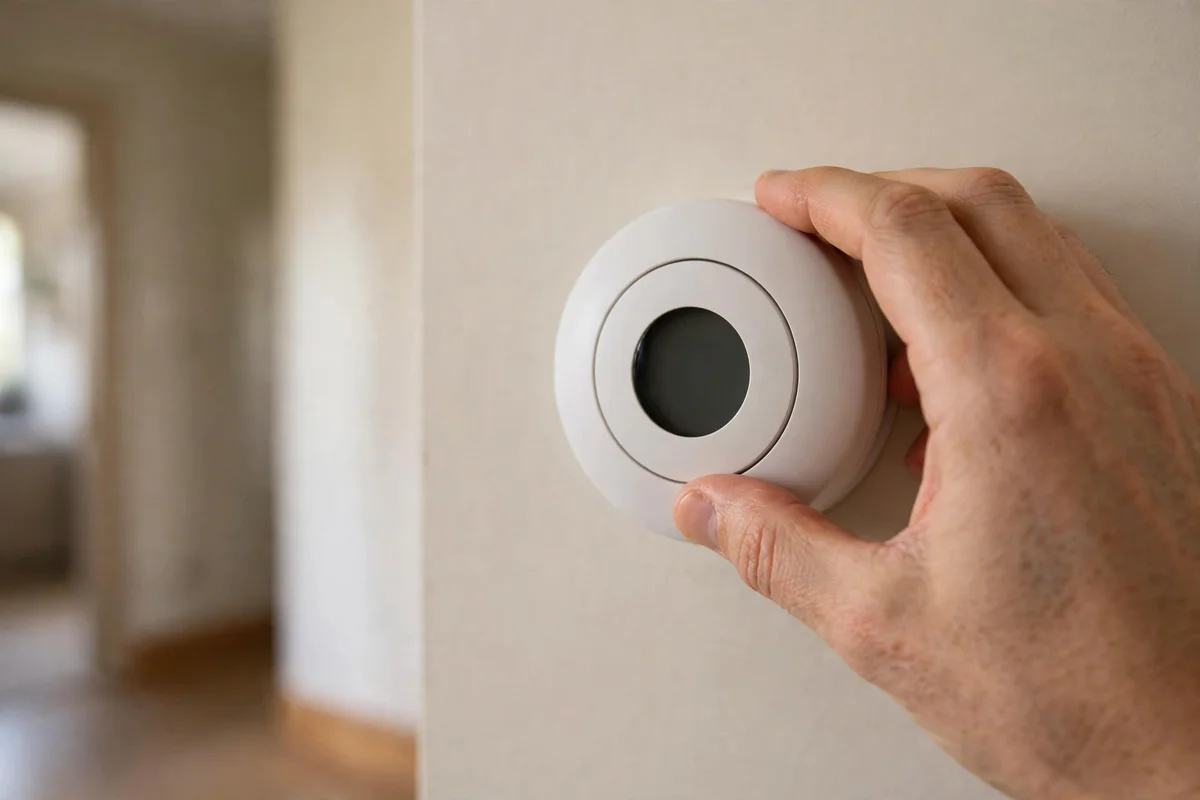
Zones should follow how a building is actually lived in, not how its pipework happened to be run. A zone that groups rooms with different needs together will always disappoint someone. Tell us how each area is used through the day and week.
We group rooms by use, sun exposure, and occupancy pattern. Bedrooms that need evening warmth, living rooms used through the day, and a home office used only on weekdays each suit different schedules, and grouping them into one zone forces a compromise that pleases nobody. South-facing rooms that gain solar heat need different settings from shaded north rooms, and an extension with different insulation from the main house needs its own zone rather than sharing one. For businesses, public areas, offices, and storage areas similarly need separate thinking, because heating an empty store room to office temperature wastes fuel every day.
Adding a zone usually means new pipework, a zone valve, a thermostat, and wiring back to the boiler controls, plus balancing so existing zones still heat well. We survey pipe routes, pump capacity, and control wiring before agreeing an addition, because a new zone on an undersized pump starves every zone at once. Thermostat position is agreed during design, away from radiators, drafts, and direct sun, at a height that senses room air rather than wall temperature. A well-designed zone system feels invisible: each area simply holds the temperature its occupants want, at the times they want it.
Some rooms too hot, others too cold? Call (302) 291-0790 and talk through zone controls.
Call (302) 291-0790Outdoor reset is the control that most owners never notice, yet it shapes fuel use and comfort more than any thermostat tweak. It adjusts boiler water temperature to the weather outside. Tell us about emitter types and insulation when we set the curve.
On a mild autumn day, radiators need only lukewarm water to hold room temperature, while on a cold winter night they need hotter water. A fixed aquastat setting ignores that difference and runs hot water all season, causing overshoot, cycling, and wasted fuel. An outdoor reset senses outside temperature and lowers boiler water temperature in mild weather, raising it only as cold deepens. Rooms hold temperature more steadily, the boiler cycles less, and condensing boilers recover more heat from exhaust gases at lower return temperatures.
Setting outdoor reset well takes observation, not just installation. We set an initial curve based on emitter types and building insulation, then adjust after watching room temperatures through mild and cold spells. Radiators sized for very hot water may need a steeper curve than radiant floors or large baseboards, and that difference is why a copied setting from another building rarely works. We explain the curve in plain words, show you which setting changes what, and note the settings so a future visit can refine them rather than starting again.
Thermostat never matching room temperature? Call (302) 291-0790 and describe what you see.
Call (302) 291-0790Control faults often look like boiler faults, and telling them apart saves an unnecessary boiler repair. A boiler that fires well but heats the wrong rooms, or that runs when nobody asked for heat, usually has a control fault. Tell us which zones misbehave and at what times.
We test thermostats against room thermometers, watch zone valves open and close on calls, check wiring and transformers, and verify aquastat and outdoor reset settings against real water temperatures. A thermostat with dead batteries or a failed sensor, a valve actuator that has seized, or a control board that misreads a sensor each produce distinct patterns, and we explain the pattern we found before fitting a part. After repair, we run each zone through a full call cycle, confirming that rooms warm, valves close, and the boiler rests when every zone is satisfied. That full-cycle test is the proof that the chain works again.
Upgrades are planned the same way as repairs: by zone need, not by gadget appeal. A programmable thermostat helps a household with regular routines, while a multi-zone upgrade helps a building where rooms genuinely need different schedules. Radiant floors, baseboards, and radiators each need control thinking of their own, and our radiant floor heating page and baseboard heating services page cover those emitters. We serve homes and businesses across Delaware, and our service areas page shows where we work. Ask about boiler maintenance and tune-up to have controls checked during the seasonal visit.
Controls depend on wiring and power as much as on thermostats and valves, and a control fault that looks like a thermostat failure often turns out to be a wiring, transformer, or power problem. Checking power first saves unnecessary part replacements.
A zone system draws power through a transformer that feeds thermostats, zone valve actuators, and control boards, and a transformer that is undersized or failing causes erratic behavior across several zones at once. Loose wire connections, especially in boiler rooms where vibration and temperature change work on terminals over time, cause intermittent faults that appear and vanish without pattern. During a controls visit we check transformer output, terminal tightness, and wire condition, and we test each zone call end to end, from thermostat through wiring to valve movement. We also note which circuits feed the boiler and controls, so a future power cut or electrical job does not leave the heating system mysteriously dead. Labeled wiring and a written control diagram, left with the boiler instructions, turn future control diagnosis from guesswork into a short, methodical check.
A controls job tests the chain link by link, since a thermostat, a valve, wiring, and the boiler itself can each mimic the others.
The job is done when every zone calls, heats, and rests on its own, without dragging the other zones with it.
Controls decide which rooms call for heat and when. A zoned home can heat one wing while another rests, but a stuck zone valve or a thermostat that loses its connection can look exactly like a boiler failure.
| Topic | First option | Second option |
|---|---|---|
| One thermostat for the whole house | Simple, but every room heats together | Far rooms and top floors suffer first |
| Zoned valves and thermostats | Each zone calls on its own schedule | A stuck valve leaves its zone cold while the boiler runs fine |
| Programmable schedules | Heat follows the day rather than running flat out | Setbacks must suit slow systems like radiant floors |
| Thermostats plus balancing | Controls plus flows working together | The combination that keeps rooms even |
Test controls before condemning the boiler
A zone valve that sticks, a thermostat that loses its connection, or a loop that was never balanced after construction can each leave one part of a home cold while the boiler itself runs fine.
This work comes up most often in zoned homes in Hockessin, zone controls in Camden, and controls work in Dover, though the same controls approach applies anywhere in Delaware. The same zone-by-zone testing also covers zoned heating in Brookside and thermostat and valve checks in Claymont. Your town page explains the local housing and conditions that shape the job.
One boiler, one set of zone valves, three areas calling on their own schedules. A stuck valve leaves its zone cold while the boiler runs fine.
Thermostat position often explains the gap. A thermostat in a draft, above a radiator, or in direct sun senses that spot, not the room as a whole. Sensor faults, dead batteries, and a zone valve that never closes can also create a mismatch, and testing each link identifies the cause.
Turning a radiator fully off can invite damp and imbalance, and it rarely saves as much as expected. A low thermostatic setting keeps the room dry and the system balanced, while a zone control that truly closes a zone is a better route for long-term unused areas.
Outdoor reset adjusts boiler water temperature to outside weather, running cooler water in mild weather and hotter water in deep cold. It suits most hot water systems, especially condensing boilers, and it improves comfort while reducing cycling. We set the curve to your emitters and building, then refine it by observation.
A cold zone usually means a stuck zone valve, a faulty thermostat, a wiring fault, or a balancing problem starving that zone. We test the thermostat call, watch the valve move, and check flow to that zone before replacing any part.
Often, yes, where that room can become its own zone with a valve and pipework. A single-room thermostat without a zone valve cannot control that room alone, because water flow follows the zone, not the thermostat. We survey pipework first and explain the route.
A boiler running with no call usually points to a zone valve stuck open, a wiring fault, a faulty control, or a hot water priority call from a tank thermostat. We test each zone and the hot water control to find which call is keeping the boiler firing.
Not necessarily. Thermostats belong per zone, not per room, unless each room is its own zone. Rooms within a zone share a thermostat, with thermostatic radiator valves fine-tuning individual rooms. Too many thermostats on one zone cause conflicting calls and cycling.
Match schedules to real occupancy: warm for waking and evening hours, lower during absence and overnight, with enough lead time for the building to recover. Radiant floors need longer lead times than radiators. We help set initial schedules and refine them after observation.
Many do, provided wiring, zone valves, and boiler controls are compatible. Compatibility depends on the control chain, not just the thermostat brand. We check wiring and zone controls before recommending a model, so the new thermostat actually drives the zones correctly.
Tell us which zones misbehave and when, and we will test the control chain link by link.
Area thermostats and manifold controls for floor-by-floor comfort.
Learn more →Baseboard runs that need balanced flow and sensible zone grouping.
Learn more →Pumps, valves, and aquastats behind every zone call.
Learn more →Last updated: October 26, 2026.