Boiler Controls and Zone Heating
Zone valves and controls for Camden subdivision homes where one room never warms.
Learn more →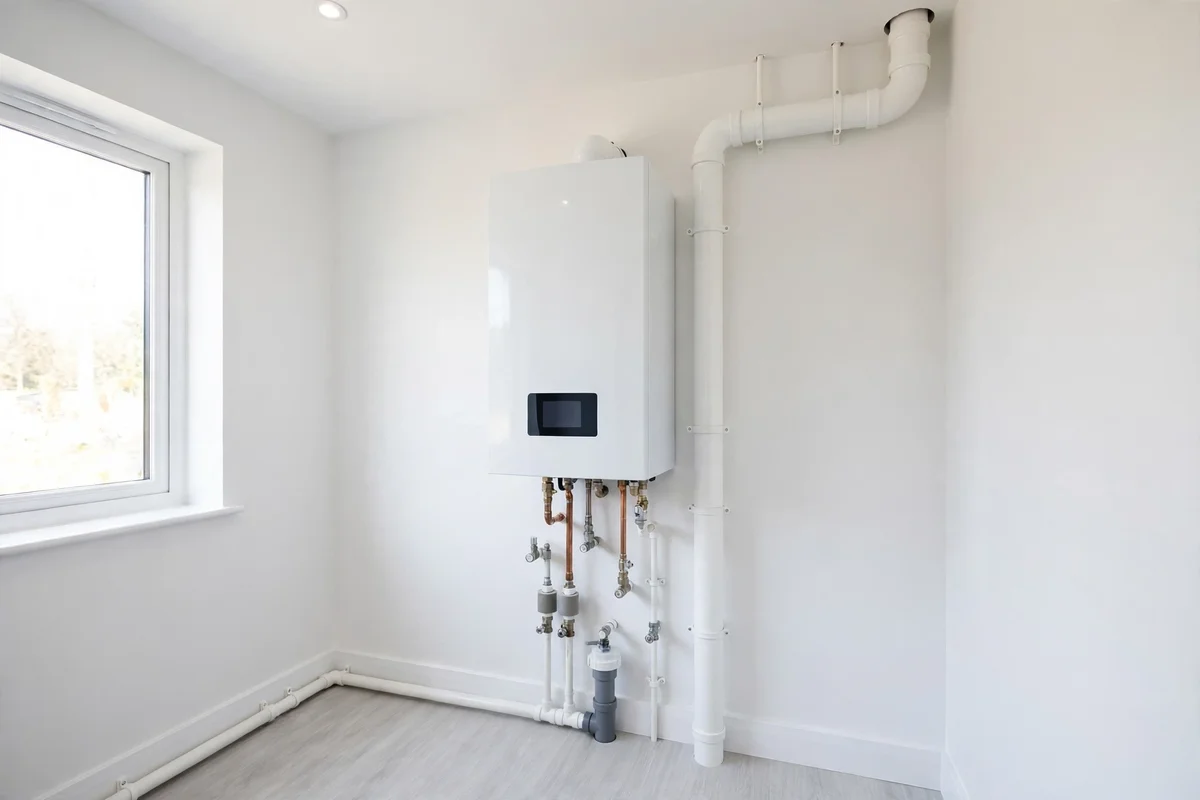
Camden sits just south of Dover, a bedroom community of family homes and newer subdivisions set between Route 13 and Delaware farmland. We repair and replace boilers across Camden, with systems that suit new builds, growing families, and the older homes at the town's core.
Camden itself is a compact town of family streets, with older homes near the town center and newer subdivisions spreading outward toward the farmland. The town center holds the oldest houses, with radiators and early hot water systems, while the subdivisions around it hold newer homes with zoned loops and wall-hung boilers.
The surrounding communities share Camden's heating story and sit minutes away. Wyoming, Camden's twin town to the west, holds similar family homes and shares the Camden-Wyoming identity. Woodside and Rising Sun-Lebanon, to the south and west, hold rural roads and newer builds on larger lots. Rodney Village and Highland Acres, toward Dover, hold postwar ranches and colonials. Kent Acres and Riverview, toward the north, mix ranches with newer subdivisions, while Magnolia, Viola, and Edgehill, farther south and west, hold small-town homes and farmland-edge builds. Towne Point and White Oak Farms, toward Dover, hold larger lots and newer homes. Camden carries ZIP code 19934, shared with Wyoming as Camden-Wyoming, so a Camden address tells us the town but not the house, and we always check on site. The table below gives each community near Camden its own ZIP code where that ZIP is verified. ZIP boundaries overlap town lines, so your street and cross street still settle it when you call.
We ask for your neighborhood and subdivision on every call because Camden homes differ sharply from one area to the next. An older home near the town center, a newer subdivision home, and a farmland-edge build each need a different first check, and knowing which one waits for us shapes the visit.

The communities served from Camden, set out as a table for quick checking. Each row uses the Camden service ZIP, 19934, because calls from these communities are served from Camden, even though some of these communities have their own ZIP codes for mailing. ZIP codes follow mailing areas rather than town lines, so your street and cross street still matter most when you call.
| Community served from Camden | ZIP code |
|---|---|
| Camden town center | 19934 |
| Wyoming, the twin town to the west | 19934 |
| Woodside | 19980 |
| Magnolia | 19962 |
| Viola | 19979 |
| Rising Sun-Lebanon | 19901, 19934 |
| Rodney Village | 19904 |
| Highland Acres | 19901 |
| Kent Acres | 19901, 19904 |
| Edgehill, Riverview, Towne Point, White Oak Farms (Dover area) | Dover ZIPs, varies by street |
Homes toward Dover carry Dover ZIP codes: Rodney Village, for example, is 19904. Those are Dover ZIPs, and the rows above list each community's own ZIP instead of Camden's 19934 throughout.
Camden housing runs from older town-center homes to newer subdivisions, and the heating follows the same spread. Town-center houses carry radiators and iron pipe, postwar ranches carry baseboards, and newer subdivisions carry zoned loops, wall-hung boilers, and radiant floors in bathrooms.
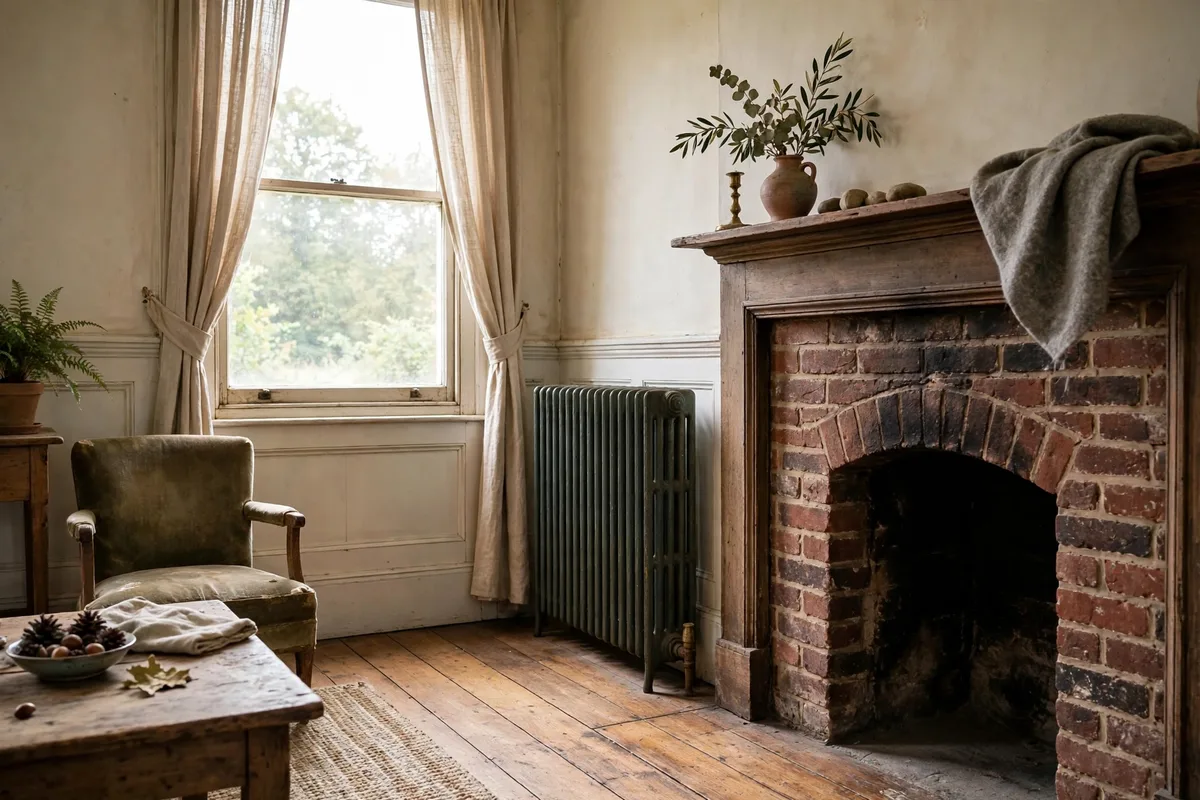
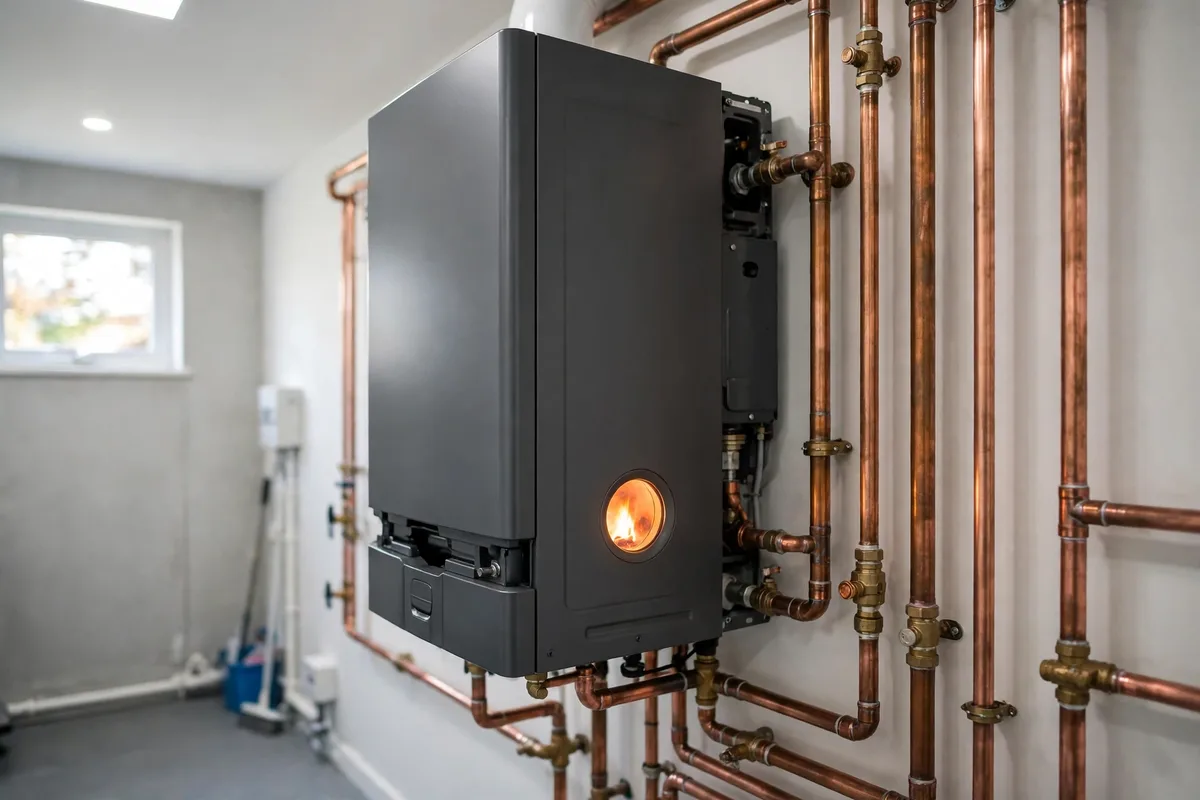
Newer subdivisions face a particular kind of fault: a control or zone problem that looks like a boiler failure. A zone valve that sticks, a thermostat that loses its connection, or a loop that was never balanced after construction can each leave one part of a new home cold while the boiler itself runs fine, and we test controls before condemning the unit. Older town-center homes face the opposite wear: iron pipe that sheds scale, valves that have not moved in years, and radiators that need vents suited to their design. Farmland-edge builds add another layer, with longer driveways and larger lots where a boiler room may sit far from the farthest rooms, and long pipe runs hide balance problems.
Materials follow the same pattern. Cast iron radiators hold heat long after the boiler stops, which suits a house that empties during the day. Copper baseboards respond fast but show every air bubble as a gurgle. Newer loops need flushing on schedule, since scale builds quietly in any system that never gets opened. Knowing the house type tells us where to look first, and we still verify on site before we touch anything.
New-build boiler trouble in Camden? Call us and tell us the symptom and your subdivision.
Camden boiler work spans repairs, replacements when repair stops making sense, and servicing for radiators, baseboards, vents, and controls in town-center homes and subdivisions. Hot water systems dominate here, along with steam in the oldest houses and combi units in smaller homes. Town-center homes and new subdivisions each get checked on their own terms.
A repair call in Camden often starts with a zone, not a boiler. One wing cold, one floor that lags, or a new subdivision home where one room never warms each point to circulation, air, or a control, and we test the zone before condemning the boiler. A boiler that locks out, a radiator that stays cold, or a pressure gauge that climbs each point to a different part of the system, and we test before replacing parts. When replacement is right, we size the new unit to the house as it stands, with its additions and insulation, rather than copying the old unit. Our services page lists the full range, from emergency repair and installation to maintenance, radiator work, and boiler controls.
Shops and small commercial buildings along Route 13 get the same attention. When a shop boiler fails, every cold morning costs a day of trade, so we check every zone and explain the choices plainly, without jargon.

Newer Camden subdivisions run zoned loops and wall-hung units, so our radiant floor heating for Camden homes and our combi boiler installation for Camden homes come up often when a subdivision system needs more than a repair.
Camden winters run milder than the north of the state but swing harder, with damp cold off the low ground of central Delaware followed by hard freezes that catch systems off guard. Open farmland around Camden lets wind cut across exposed lots, so a house on an open subdivision edge loses heat faster than a sheltered town-center home.
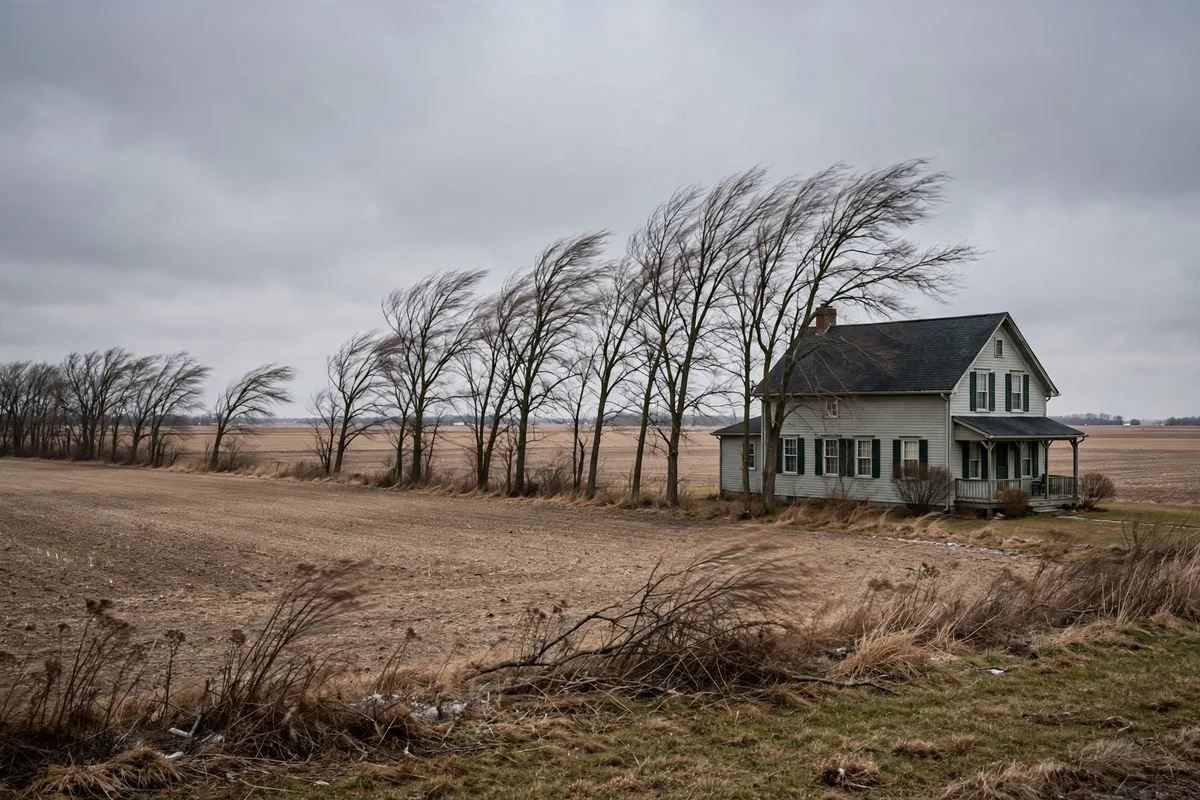
The symptoms follow the weather. A boiler that copes in a mild December week can fail during a January cold snap, when a weak circulator or a tired igniter finally gives out. Damp air keeps basements humid, which rusts fittings and lets air collect in high radiators, so a radiator that gurgles in autumn often points to damp as much as to air. Summer idleness brings its own fault: a pump that sat all summer may hum without turning when October calls it back. The Delaware Department of Natural Resources and Environmental Control publishes guidance on state environmental programs on the DNREC website, and its pages on water and air give useful background on the low-lying conditions that shape heating here.
Our service calendar follows that cycle. Late summer is for a tune-up that catches stuck pumps, worn vents, and weak ignition ahead of the heating season, while midwinter is for a check that finds strain only sustained cold exposes. Small routines matter as well: keep furniture clear of radiators, keep stored boxes out of the boiler area, and call as soon as a radiator stays cold for more than a day, rather than waiting for the house to go cold.
Camden landmarks make describing your home easy. The town sits between US Route 13 and Delaware farmland, just south of Dover, with Wyoming as its twin town to the west. Brecknock County Park, with its castle playground and historic buildings, sits nearby toward Rodney Village, and the Caesar Rodney School District, which serves Camden families, marks the community's school side.
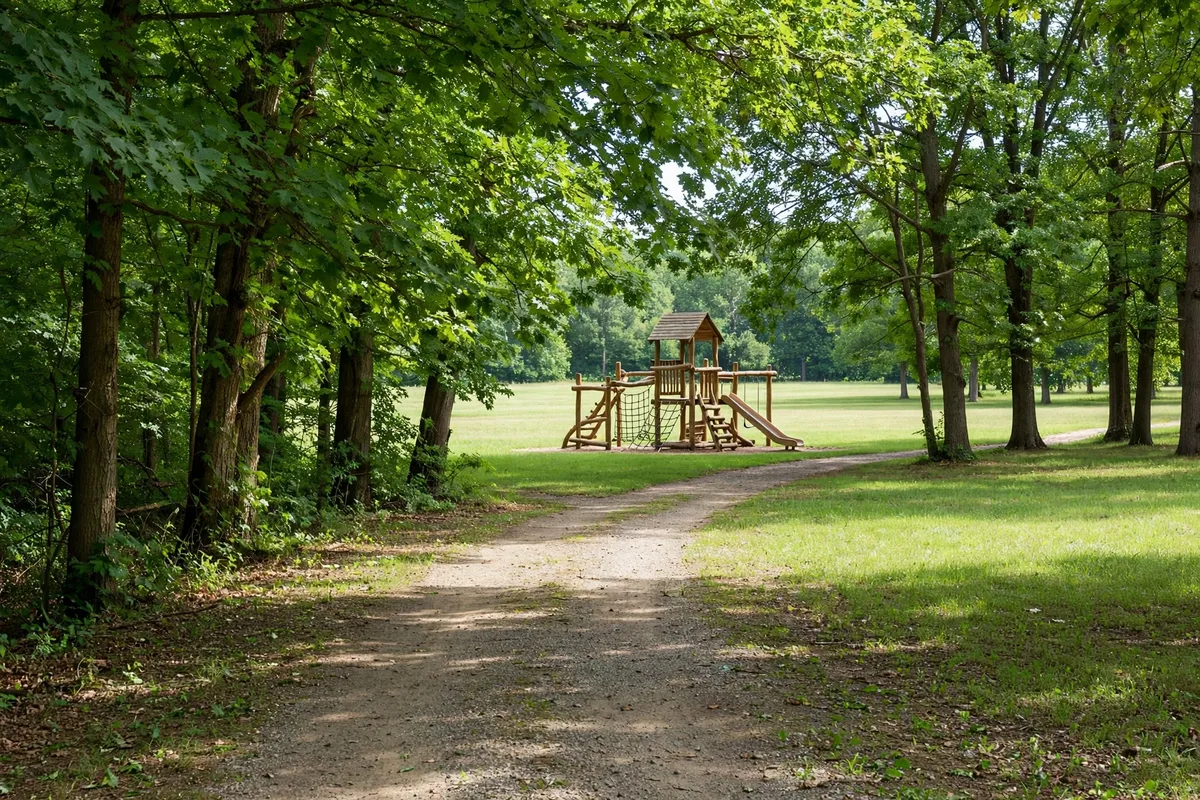
Those landmarks help us plan the day. A call from the town center and a call from a newer subdivision are different routes, and the Route 13 corridor needs a different approach than the farmland roads toward Woodside and Viola. Dover, the state capital, sits a few miles north, and its landmarks, The Green, Legislative Hall, and Silver Lake Park, mark the direction of the city for anyone new to the area. For travel, Philadelphia International Airport is the nearest large airport, and Dover Air Force Base sits at the southeast edge of Dover. That base serves the military only and boards no commercial passengers, so Philadelphia remains the flight option for Camden homes. The closest large hospital is Bayhealth Kent Campus, in Dover itself.
When you call, a neighborhood and a cross street save time for everyone. Tell us the symptom, the kind of heat emitters you have, and whether your home is an older town-center house or a newer subdivision build, and we will talk through what to check while we arrange the visit. Grotto Pizza on East Street is one of Camden's familiar local restaurants, useful as a landmark when you describe your home.
The map covers Camden and the surrounding area in our service. Place your neighborhood on it, then call and tell us your street and cross street.
Camden boilers heat from November through March, idle through hot, humid summers, and give up their faults at the autumn and spring changeovers. A seasonal rhythm catches those faults while they are still small, and the autumn check is the one that matters most.
Spring is for the aftermath: flushing sediment, replacing vents that hissed, and checking fittings that spent months in damp basement air. Summer suits bigger work, since a replacement or a new zone fits easily while the house is warm and the boiler is idle, and it suits new-build checks that need the system open. Autumn is the main check, when we fire the system from cold, bleed every radiator, test every zone, and watch a full heat cycle from startup to shutdown, so the first cold night does not become the first surprise. Winter is for watching: a pressure gauge that drifts, a new noise from a pump, or a zone that cools first all deserve a call while the problem is still small.
In newer subdivisions, the autumn check matters even more, because a zone that never calls or a loop that was never balanced can run for months before anyone notices, and the check is designed to find exactly those faults. That habit, service at the changeover and attention during the season, is what keeps Camden systems heating through the coldest weeks.
For Camden homes, the work that comes up most often is Boiler Controls and Zone Heating, Boiler Maintenance and Tune-Up, and Boiler Installation. Each one is a separate service with its own page, and the links above go straight to the page that explains when it fits and how it works.
A single cold room in a new home usually points to balance, air, or a zone control, not the boiler itself. A loop that was never balanced after construction favors some rooms and starves others, and a zone valve that sticks shut leaves its rooms cold while the rest of the house heats. We test the zone, bleed the loop, and balance the flows before concluding anything about the boiler.
Wind exposure raises heat loss, but a boiler that copes in calm cold and fails only in wind usually points to circulation or control strain, not size. Every zone calls at once in a cold snap, and a weak pump cannot push water through the longest loops when demand peaks. We test circulation under load before concluding anything about boiler size.
Yes, we cover Camden and Wyoming together, as the two towns share the Camden-Wyoming identity and ZIP code 19934. We also cover the surrounding communities, including Woodside, Rising Sun-Lebanon, Rodney Village, Highland Acres, Kent Acres, Riverview, Magnolia, Viola, and Edgehill. The system in each community gets treated on its own terms.
We weigh the repair history against the state of the whole system. One breakdown after a long quiet run is often a straightforward fix. A boiler that keeps failing, drips at joints, or loses pressure whenever cold weather settles in is usually past the point where another repair helps. We check the unit, the pipework, and the radiators, then discuss repair and replacement side by side.
Gentle weather hides weakness, while a cold snap exposes it all at once. When every zone calls for heat together, the longest loops run coldest, and a weak pump or a tired igniter that managed in October finally fails. That pattern suggests circulation or ignition strain rather than boiler size, so we test both parts under load, not only at idle, to track down the weak one.
Yes, wind raises heat loss through walls, windows, and roofs, and open lots around Camden catch more wind than sheltered town-center streets. A house on an exposed subdivision edge loses heat faster, so its boiler cycles harder and its farthest rooms cool first. Sealing drafts and balancing the loop help, and we check both when a wind-exposed home heats unevenly.
Tell us your subdivision or street, the kind of heat emitters you have, and what the system is doing differently. We will talk through the next step and arrange a visit.
Zone valves and controls for Camden subdivision homes where one room never warms.
Learn more →A seasonal check that catches stuck pumps and tired vents before Camden winter arrives.
Learn more →Sizing and fitting a new boiler to a Camden home as it stands today, not to the old unit.
Learn more →Last updated: October 26, 2026.